This is a legacy page. Please click here to view the latest version.
Tue 29 Jul 2008, 08:03 GMT

US legislation paves the way for scrubbing technology


Seawater scrubbing will enable operators to reduce ship emissions and fuel costs.


UK-based Krystallon Ltd. has said the recent U.S. ratification of the Maritime Pollution Prevention Act of 2008 has opened the way for vessels entering U.S. coastal waters to fit new ground-breaking technology that slashes emissions from ships.

The technology, known as seawater scrubbing, offers ship operators entering emissions restricted areas, known as ECAs, off the U.S. coastline the option to fit the technology and avoid huge hikes in their fuel costs for 'cleaner fuels' such as diesel as legislation is rolled out.

According to Krystallon, by switching to an onboard ship scrubber ship operators will cut out 100% sulphur oxide (SOx) and 80% particulate matter. The company says 'clean fuels', such as diesel, will cut around 97% SOx and only 10% particulates.

On July 21st 2008 President George Bush signed into law the Maritime Pollution Prevention Act of 2008 (H.R.802) which meant the U.S will incorporate international legislation to reduce harmful emissions from ships.

Under the legislation, ships are restricted to burning cleaner fuels, known as distillates, or given the option to fit scrubbing technology. The U.S. is likely to see Emissions Control Areas (ECAs) up to 200 miles offshore by as early as 2010, but concerns circulate about the price and availability of cleaner fuel.

The International Energy Agency (IEA) recently reported there had been noticeable growth in demand for middle distillate transportation fuels, which are now said to make up 58 percent of total oil product demand.

One of the factors it cited was increasing demand in fuels like diesel – which retails at 55 percent more than heavy fuel oil in ports like Los Angeles - from ships. According to research carried out by Krystallon, if vessels entering U.S. west coast ports were to switch from using diesel to scrubbing, ship operators and the economy would save $3.57 billion per year.

Chris Leigh-Jones, Managing Director of Krystallon, explained: “By switching to scrubbing technology, which can be fitted while a vessel is in drydock in as little as two weeks, ship operators benefit from continuing to purchase traditional and cheaper bunker fuel in the knowledge that they have 'future-proofed' their vessel against new emissions legislation for at least the next 20 years.”

Andy Osbourne, New Business Director for Krystallon commented: “U.S. ratification for IMO Annex VI has been a long time coming, but its worth waiting for. We are delighted that the ship operators in U.S. coastal waters and the U.S. citizens breathing high-polluting air from ships onshore will benefit from this truly 'win-win' technology.

“The economics for scrubbing technology in a 200-mile ECS (Emissions Control Area) offshore the U.S. west coast look very attractive right now, with payback for fitting a scrubber likely to be months not years versus running a vessel on marine diesel.”


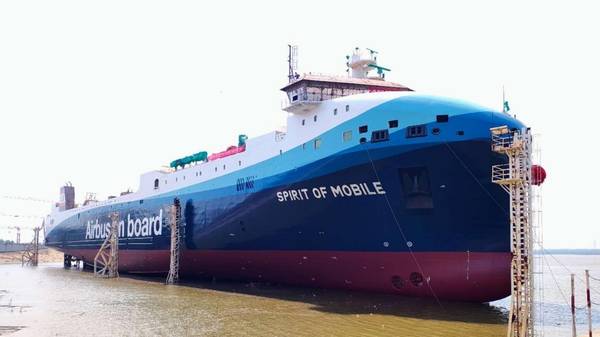
Spirit of Mobile vessel. LD Armateurs launches second low-emission ro-ro vessel for Airbus charter fleet  

French shipowner LD Armateurs has launched its second methanol-capable, rotor sail-equipped ro-ro vessel at a Chinese shipyard.

Verde Marine Energy (VME) logo. Verde Marine Energy renews ISCC EU certification and achieves RED III compliance  

Dutch bunker supplier Verde Marine Energy says it is now fully compliant with the EU's updated renewable energy rules.

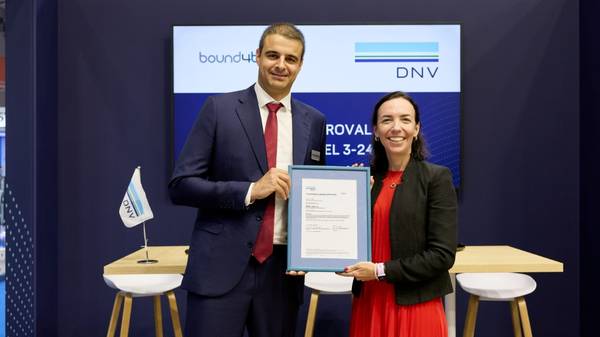
bound4blue receives DNV Type Approval. Bound4blue wins DNV type approval for its largest installed eSAIL suction sail  

DNV certification of the Model 3-24 eSAIL is said to support wider adoption of wind-assisted propulsion.

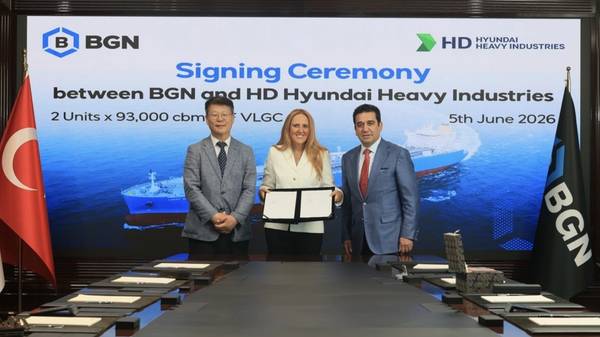
BGN and HD HHI signing ceremony. BGN expands owned LPG fleet with two additional VLGCs from HD HHI  

BGN signs a new shipbuilding contract, bringing its owned VLGC fleet to 19 vessels.

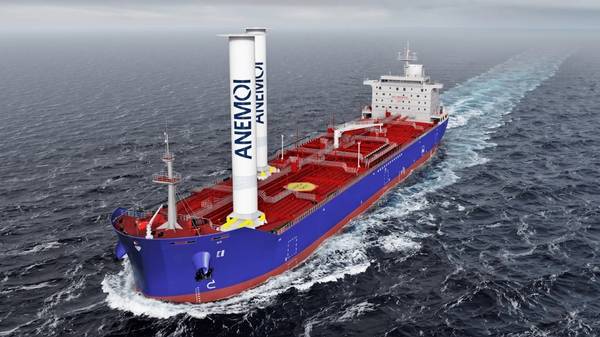
Medium-range (MR) tanker with Rotor Sails render. Anemoi and partners win DNV approval in principle for rotor sail integration on MR tankers  

DNV issues approval in principle for EX-rated rotor sail design on medium-range product tankers.

TMS Tankers logo. Lloyd’s Register delivers fleet-wide energy transition roadmap for TMS Tankers  

LR Advisory maps vessel-level compliance risk and decarbonisation pathways across the Greek owner’s tanker fleet.

Dr Prapisala Thepsithar, GCMD. GCMD shares biofuel assurance and green finance insights at Hong Kong shipping decarbonisation forum  

The Global Centre for Maritime Decarbonisation presented pilot findings on biofuels and energy efficiency financing.

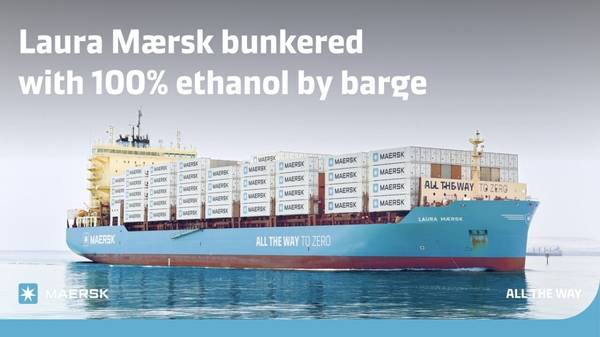
Laura Maersk ethanol bunkering graphic. Maersk conducts large-scale ethanol bunkering trial on Laura Maersk in Rotterdam  

A.P. Moller – Maersk has conducted a barge-delivered ethanol bunkering operation as part of ongoing fuel trials.

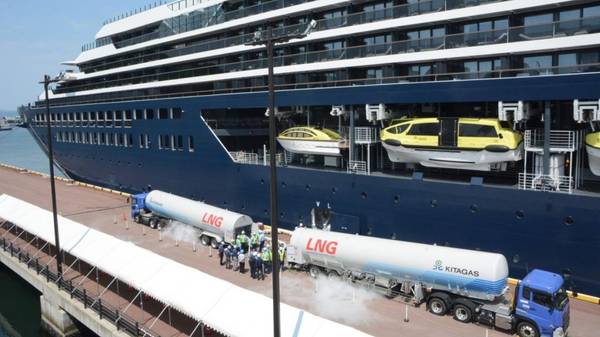
Luminara vessel truck-to-ship bunkering. MOL Techno-Trade completes first LNG bunkering for international cruise ship in Hokkaido  

Truck-to-ship LNG operation at Hakodate marks first such supply to an international cruise vessel in Hokkaido.

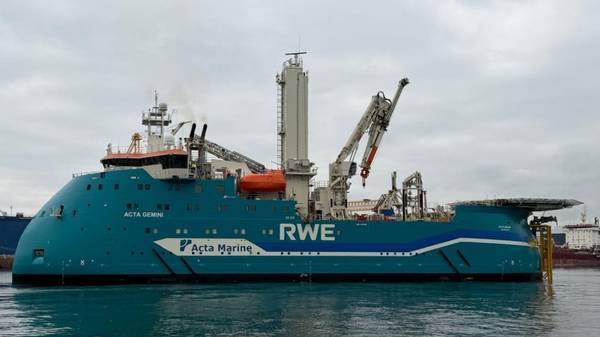
Acta Gemini vessel. Acta Marine takes delivery of methanol dual-fuel CSOV Acta Gemini for RWE wind farm charter  

The vessel will support operations at the Sofia Offshore Wind Farm at Dogger Bank.


↑  Back to Top


 Recommended