This is a legacy page. Please click here to view the latest version.
Mon 28 Jul 2008, 11:30 GMT

Californian ports expand clean fuel choices


Low-sulphur MDO included as fuel option for air quality program in Long Beach and Los Angeles.


An innovative air quality program that offers incentives to oceangoing vessels for switching to cleaner, low-sulphur fuels when traveling near port has been expanded to make it even easier for shipping lines to participate.

Officials at the ports of Long Beach and Los Angeles have expanded the definition of low-sulphur fuel to include both low-sulphur marine gas oil (MGO) and marine diesel oil (MDO), giving shipping lines more flexibility and another fuel option.

The use of MDO and MGO as equivalent emissions reduction options is consistent with the California Air Resources Board rule, adopted on July 24th 2008, that will require vessels to use low-sulphur fuel near Californian ports from July 1st 2009.

Port officials congratulated the 14 shipping lines already taking part in the ports' groundbreaking program, in which vessels are reimbursed when they run on low-sulphur fuel within 40 nautical miles of the harbor.

"This is an exciting program with potential to eliminate an enormous amount of air pollution," said Long Beach Board of Harbor Commissioners President James C. Hankla. "We applaud those shipping lines that have signed up and we welcome all carriers to join us in this important project."

As of July 23rd, 14 carriers at the two ports had enrolled in the incentive program. They include Carnival Cruise Line, CMA CGM, Evergreen Marine, Great American Lines, Hapag Lloyd, Hyundai Merchant Marine, Maersk, Magical Cruise Co. (Disney), Norwegian Cruise Line, NYK (PCC Division), Orient Overseas Container Line (OOCL), Prestige Cruises, Toyofuji Shipping and "K" Line.

These carriers have enrolled a total of 136 vessels which are scheduled to make nearly 300 port calls every three months.

"On the first day of this program, we had more than 100 ships committed to using cleaner fuel in their engines. That alone shows the partnership both ports have forged with our customers in the mission to move forward in cleaning up operations on all fronts," said Los Angeles Harbor Commission President S. David Freeman.

In the air quality program, vessel operators agree to switch to low-sulphur fuel within at least 20 nautical miles - and as far as 40 miles- from Point Fermin, and to slow their speed to 12 knots or less. As low-sulphur fuel is more expensive than the bunker fuel typically used by ships, the ports of Long Beach and Los Angeles will reimburse the vessel operators for the difference in cost. In one year, the program could cost the Port of Long Beach $9.9 million and the Port of Los Angeles $8.6 million, according to recent estimates.

The program commenced on July 1st 2008, and is scheduled for a year. The California Air Resources Board is then set to require the use of low-sulphur fuel near Californian ports from July 1st 2009.

MDO was added as a low-sulphur option because it has the same pollution-reduction properties as MGO, which has been part of the program since its inception.


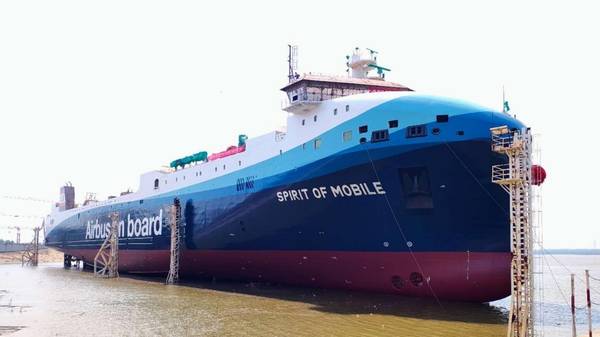
Spirit of Mobile vessel. LD Armateurs launches second low-emission ro-ro vessel for Airbus charter fleet  

French shipowner LD Armateurs has launched its second methanol-capable, rotor sail-equipped ro-ro vessel at a Chinese shipyard.

Verde Marine Energy (VME) logo. Verde Marine Energy renews ISCC EU certification and achieves RED III compliance  

Dutch bunker supplier Verde Marine Energy says it is now fully compliant with the EU's updated renewable energy rules.

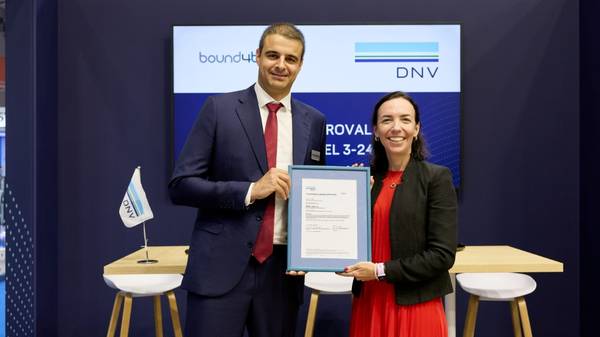
bound4blue receives DNV Type Approval. Bound4blue wins DNV type approval for its largest installed eSAIL suction sail  

DNV certification of the Model 3-24 eSAIL is said to support wider adoption of wind-assisted propulsion.

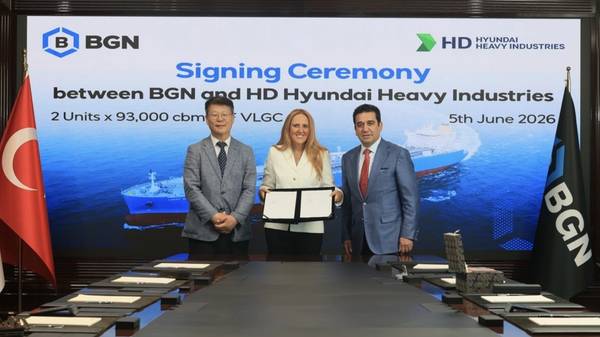
BGN and HD HHI signing ceremony. BGN expands owned LPG fleet with two additional VLGCs from HD HHI  

BGN signs a new shipbuilding contract, bringing its owned VLGC fleet to 19 vessels.

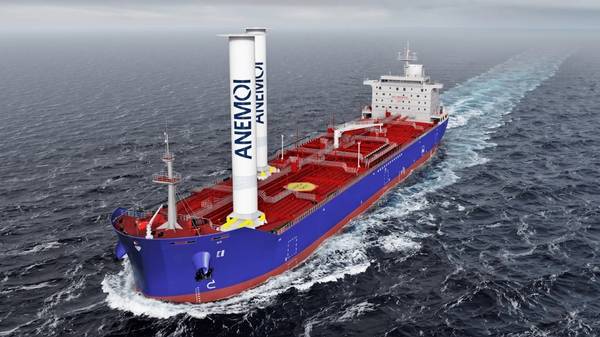
Medium-range (MR) tanker with Rotor Sails render. Anemoi and partners win DNV approval in principle for rotor sail integration on MR tankers  

DNV issues approval in principle for EX-rated rotor sail design on medium-range product tankers.

TMS Tankers logo. Lloyd’s Register delivers fleet-wide energy transition roadmap for TMS Tankers  

LR Advisory maps vessel-level compliance risk and decarbonisation pathways across the Greek owner’s tanker fleet.

Dr Prapisala Thepsithar, GCMD. GCMD shares biofuel assurance and green finance insights at Hong Kong shipping decarbonisation forum  

The Global Centre for Maritime Decarbonisation presented pilot findings on biofuels and energy efficiency financing.

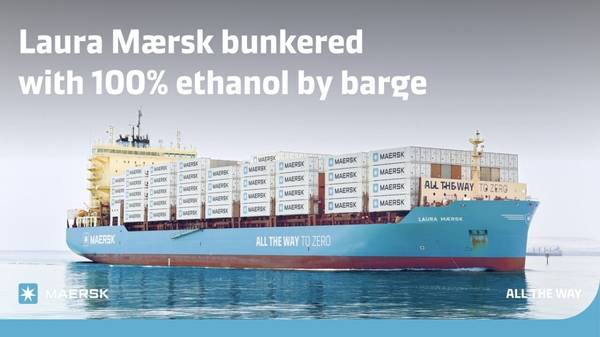
Laura Maersk ethanol bunkering graphic. Maersk conducts large-scale ethanol bunkering trial on Laura Maersk in Rotterdam  

A.P. Moller – Maersk has conducted a barge-delivered ethanol bunkering operation as part of ongoing fuel trials.

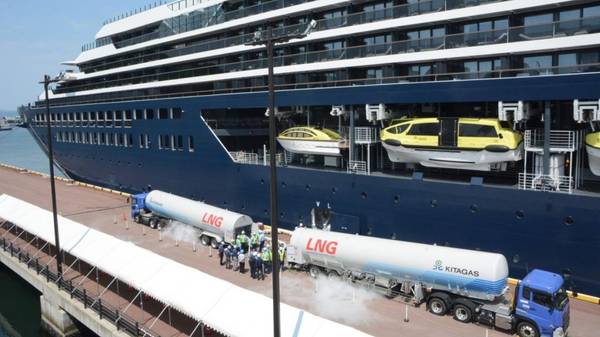
Luminara vessel truck-to-ship bunkering. MOL Techno-Trade completes first LNG bunkering for international cruise ship in Hokkaido  

Truck-to-ship LNG operation at Hakodate marks first such supply to an international cruise vessel in Hokkaido.

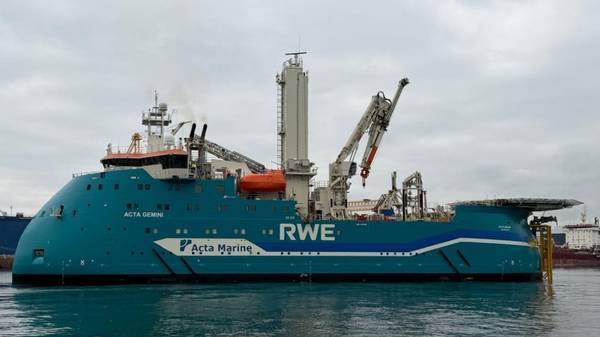
Acta Gemini vessel. Acta Marine takes delivery of methanol dual-fuel CSOV Acta Gemini for RWE wind farm charter  

The vessel will support operations at the Sofia Offshore Wind Farm at Dogger Bank.


↑  Back to Top


 Recommended