This is a legacy page. Please click here to view the latest version.
Tue 15 Jul 2008, 10:01 GMT

Emergency bunker surcharge is put on hold


Bunker levy is delayed following criticism by three shippers' councils.


The introduction of an Emergency Bunker Surcharge (EBS) to be collected from consignees in Hong Kong and South China has been put on hold following strong criticism from the Hong Kong Shippers' Council.

Commenting recently on the surcharge, Willy Lin, Chairman of The Hong Kong Shippers’ Council said “There is no way that Hong Kong and South China shippers will accept this requirement of collecting the new charge from them only. Bunker and fuel surcharges are always part of freight payment and should be collected from the party that pays freight."

"Shipping lines by specifying that the new Emergency Bunker Surcharge would be collected from consignees in Hong Kong and South China only has violated international shipping practices and cannot be accepted,” Lin said.

Shipping lines running the Taiwan – Hong Kong/South China trade had previously announced that from July 1st 2008 they would levy a new Emergency Bunker Surcharge (EBS) of HK$440/RMB400 per TEU to be collected only from consignees in Hong Kong and South China, regardless of whether freight has already been prepaid in Taiwan or not.

The shipping lines known to be involved in the levy include OOCL (HK) Ltd, Evergreen Marine (Hong Kong) Ltd, RCL – Regional Container Lines (HK) Ltd, T.S. Lines Ltd, Wan Hai Lines (HK) Ltd, Kanway Shipping Ltd, Cheng Lie Navigation (HK) Co Ltd and Yang Ming Marine Transport Corp.

Following the Hong Kong Shippers's Council fierce criticism of the Emergencey Bunker Surcharge, Bill Chang, Managing Director of OOCL, issued a letter to Willy Lin, advising the Council that they would be putting on hold the implementation of the EBS, which was planned to be come into effect at the start of this month.

Annual volume of Taiwan – Hong Kong/South China trade is estimated to be around one million TEU. The Hong Kong Shippers' Council says shippers in Hong Kong and South China would be charged an estimated HK$440 million by shipping lines in total.

Speaking about the levy, Toland Lam, Executive Chairman of the Shenzhen Shippers’ Association said “South China shippers are very angry with shipping lines’ action which is totally unjust. Shippers will reject the charge and shipping lines have to be responsible for all chaos, and costs caused by delay in release of shipments that might involve extra storage, equipment rental and much more seriously, disruption of production”.

Frank Tang, Chairman of the Macau Shippers’ Association also rejected the surcharge saying “We shippers understand the heavy burden of surging fuel price to shipping lines, but shipping lines have to observe basic business ethics.

“The requirement of making solely consignees in Hong Kong and South China to pay for the charge has violated the basic rules of the game. The charge is a sheer act of exploitation against shippers in Hong Kong and South China,’ said Tang.

Willy Lin commented on what he called the "anti-competition issue" saying "the shipping lines involved account almost 100% of the trade. Introducing the same new charge at the same time leaves users without choice. No modern economy should allow such an ugly act which is totally anti-competition in nature.”

The three shippers’ councils demanded that shipping lines bring to an end their action of collecting the charge from Hong Kong and South China only. They also called for a rejection of the charge by shippers in Hong Kong and South China and for the active intervention of governments to prevent any disruption to commerce.

In his letter announcing the withdrawal of the EBS, Bill Chang said OOCL would continue to review how it can recover surging fuel costs. He pointed out that bunker costs have risen by 100 percent over the last 12 months and said that carriers needed to recover these costs in order to be able to continue providing services in the market.

He also stated that the EBS was not a new surcharge, saying that the company has already been charging an EBS for shipments for various routes in the Intra-Asia trade.


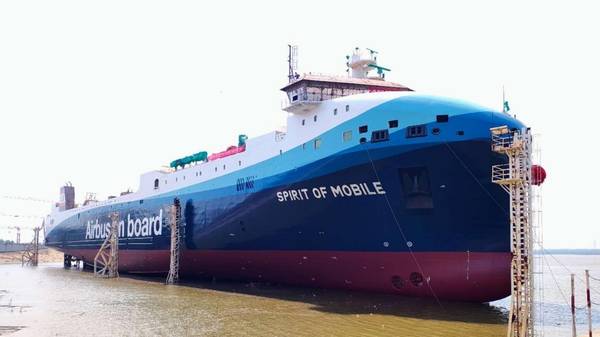
Spirit of Mobile vessel. LD Armateurs launches second low-emission ro-ro vessel for Airbus charter fleet  

French shipowner LD Armateurs has launched its second methanol-capable, rotor sail-equipped ro-ro vessel at a Chinese shipyard.

Verde Marine Energy (VME) logo. Verde Marine Energy renews ISCC EU certification and achieves RED III compliance  

Dutch bunker supplier Verde Marine Energy says it is now fully compliant with the EU's updated renewable energy rules.

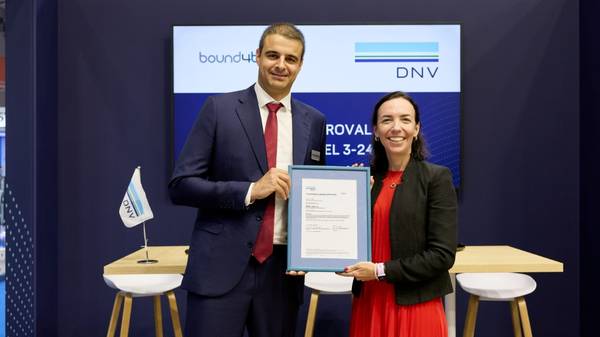
bound4blue receives DNV Type Approval. Bound4blue wins DNV type approval for its largest installed eSAIL suction sail  

DNV certification of the Model 3-24 eSAIL is said to support wider adoption of wind-assisted propulsion.

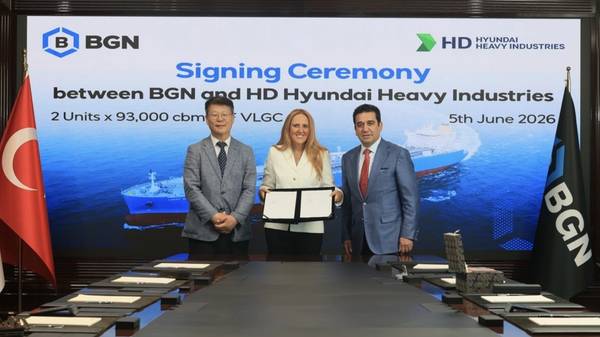
BGN and HD HHI signing ceremony. BGN expands owned LPG fleet with two additional VLGCs from HD HHI  

BGN signs a new shipbuilding contract, bringing its owned VLGC fleet to 19 vessels.

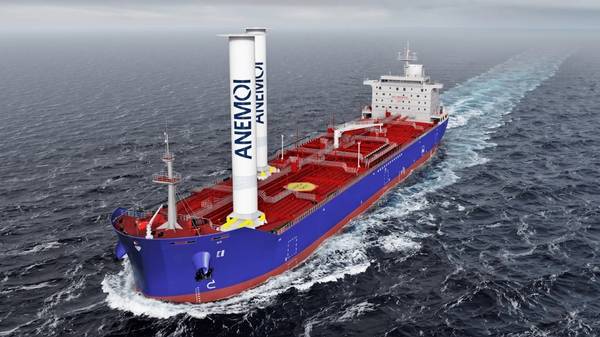
Medium-range (MR) tanker with Rotor Sails render. Anemoi and partners win DNV approval in principle for rotor sail integration on MR tankers  

DNV issues approval in principle for EX-rated rotor sail design on medium-range product tankers.

TMS Tankers logo. Lloyd’s Register delivers fleet-wide energy transition roadmap for TMS Tankers  

LR Advisory maps vessel-level compliance risk and decarbonisation pathways across the Greek owner’s tanker fleet.

Dr Prapisala Thepsithar, GCMD. GCMD shares biofuel assurance and green finance insights at Hong Kong shipping decarbonisation forum  

The Global Centre for Maritime Decarbonisation presented pilot findings on biofuels and energy efficiency financing.

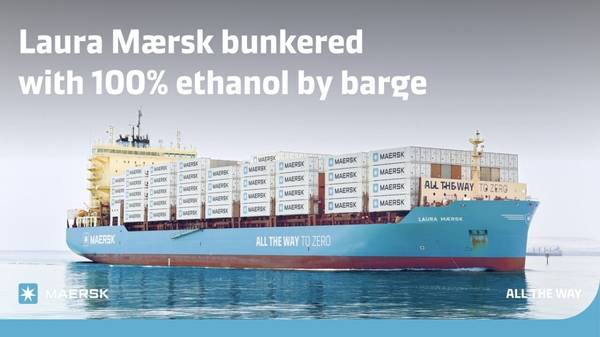
Laura Maersk ethanol bunkering graphic. Maersk conducts large-scale ethanol bunkering trial on Laura Maersk in Rotterdam  

A.P. Moller – Maersk has conducted a barge-delivered ethanol bunkering operation as part of ongoing fuel trials.

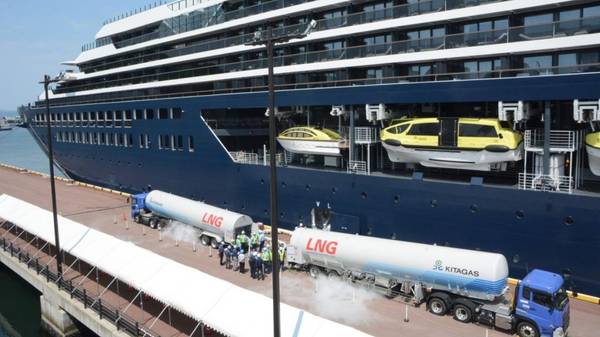
Luminara vessel truck-to-ship bunkering. MOL Techno-Trade completes first LNG bunkering for international cruise ship in Hokkaido  

Truck-to-ship LNG operation at Hakodate marks first such supply to an international cruise vessel in Hokkaido.

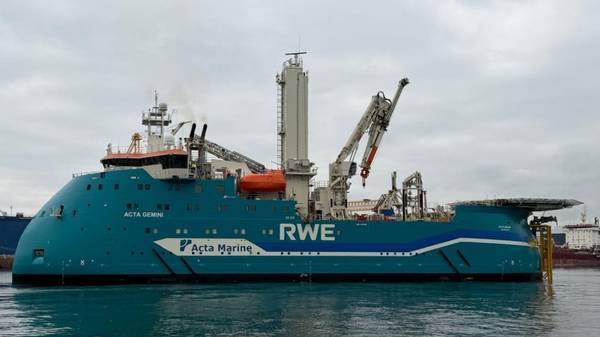
Acta Gemini vessel. Acta Marine takes delivery of methanol dual-fuel CSOV Acta Gemini for RWE wind farm charter  

The vessel will support operations at the Sofia Offshore Wind Farm at Dogger Bank.


↑  Back to Top