This is a legacy page. Please click here to view the latest version.
Tue 3 Jun 2008, 10:14 GMT

Low emission tug wins Clean Air Technology Award


Environmental Protection Agency applauds 'world's first true hybrid' tug .


Foss Maritime has won the Environmental Protection Agency’s Clean Air Technology Award for development of its low emission ‘Green Dolphin’ hybrid tug, the first time a maritime operating company has ever received the federal government’s prestigious honor.

Foss Maritime President and CEO Gary Faber and other top company officials accepted the coveted award in a ceremony May 28 at the Smithsonian National Museum of the American Indian.

Industry analysts and environmental officials alike have praised the ‘Green Dolphin’ hybrid tug, which Foss claims to be 'the world’s first true hybrid'. It reduces nitrogen oxide, particulate emissions, sulphur dioxide and carbon emissions and will exceed the EPA’s Tier 2 emissions requirement for marine engines. The hybrid tug is being built in collaboration with the ports of Long Beach and Los Angeles and is scheduled to begin operation in southern California in the Autumn of 2008.

“At Foss Maritime we are committed to technological innovation and being stewards of the environment,” Faber said as he received the EPA award. “In that way the ‘Green Dolphin’ hybrid tug truly embodies our company’s core values. Over the 119-year-history of our company this kind of forward thinking building is what the public, our customers and the industry itself have come to expect from us.”

“EPA applauds the winners of the 2007 Clean Air Excellence Awards who are helping us deliver healthier air and healthier lives to all Americans,” said EPA Administrator Stephen L. Johnson. "Their dedication to creating a cleaner tomorrow is truly a breath of fresh air.”

Unlike other tugs, the ‘Green Dolphin’ hybrid tug will rely on batteries and an active power management system to minimize engine use. When the engines are used, they will run at power levels that maximize efficiency, reversing the trend of harbor tugs to spend approximately 60 percent of their time at less efficient low power levels. Main engine emissions reductions from using the hybrid tug are expected to be in the order of 44 percent for particle emissions and nitrous oxide. Fuel consumption is expected to decrease by 20 to 30 percent with a commensurate reduction in sulphur dioxide and carbon emissions.

The ‘Green Dolphin’ hybrid tug will help lower costs. The primary financial benefits of the design come through fuel and lube savings and reduced life cycle and maintenance costs of the major equipment components.

Additionally, the ‘Green Dolphin’ hybrid tug’s modular design can be applied as a retrofit technology for existing tugboats. It will be able to incorporate future energy storage improvements in battery technology and hydrogen fuel cells.

“We are grateful for EPA’s recognition of the ‘Green Dolphin’ hybrid tug,” said Susan Hayman, Vice President of Health, Quality, Safety and Environment for Foss Maritime.

“Any time you introduce cutting edge technologies there are barriers that you must overcome. We’ve done that. Our company’s commitment to the ‘Green Dolphin’ project has been unwavering. And we have developed a tremendous partnership with the ports of Long Beach and Los Angeles in the process.”

The ‘Green Dolphin’ hybrid tug, which is being built at the company’s Rainier shipyard in Oregon, is just one of several ways Foss is moving aggressively to improve the global environment.

In October 2007 the company announced its vessels were switching to ultra low sulfur diesel fuel (ULSDF), a move aimed at producing a significant reduction in emissions of particulate matter and carbon monoxide. Port officials in Seattle and Portland lauded Foss for taking an important step to reducing the carbon footprint in Elliott Bay, Puget Sound and the Columbia and Snake rivers.

In August 2007, Foss announced that it had joined the SmartWay Transport® Partnership, a voluntary collaboration between EPA and the freight industry designed to increase energy efficiency while significantly reducing greenhouse gases and air pollution. Foss was the first carrier accepted into the program for its marine transportation services.

Foss has pledged to contribute to the partnership’s goal to reduce 33 to 66 million metric tons of carbon dioxide and up to 200,000 tons of nitrogen oxide per year by 2012 by improving the environmental performance of its marine operations.

Pictured: Dolphin-Class tug – 5,080 horsepower ASD.


TMS Tankers logo. Lloyd’s Register delivers fleet-wide energy transition roadmap for TMS Tankers  

LR Advisory maps vessel-level compliance risk and decarbonisation pathways across the Greek owner’s tanker fleet.

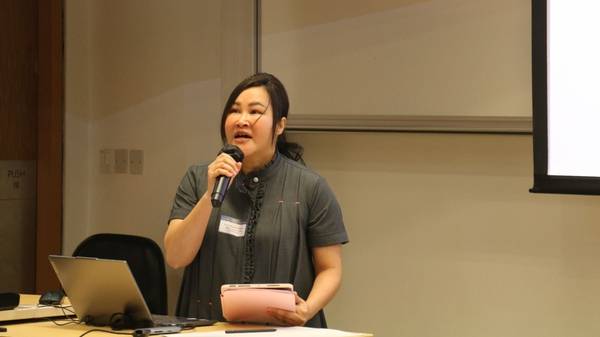
Dr Prapisala Thepsithar, GCMD. GCMD shares biofuel assurance and green finance insights at Hong Kong shipping decarbonisation forum  

The Global Centre for Maritime Decarbonisation presented pilot findings on biofuels and energy efficiency financing.

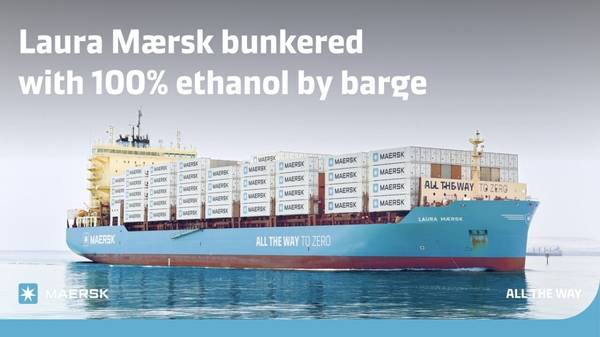
Laura Maersk ethanol bunkering graphic. Maersk conducts large-scale ethanol bunkering trial on Laura Maersk in Rotterdam  

A.P. Moller – Maersk has conducted a barge-delivered ethanol bunkering operation as part of ongoing fuel trials.

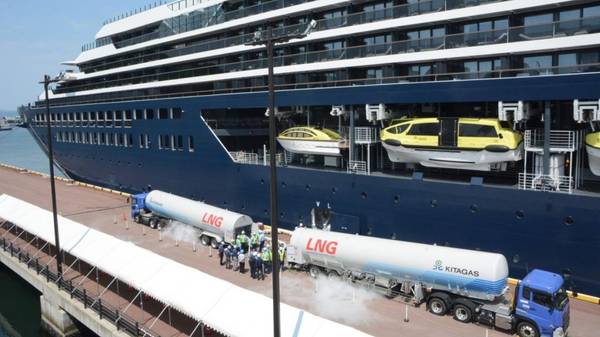
Luminara vessel truck-to-ship bunkering. MOL Techno-Trade completes first LNG bunkering for international cruise ship in Hokkaido  

Truck-to-ship LNG operation at Hakodate marks first such supply to an international cruise vessel in Hokkaido.

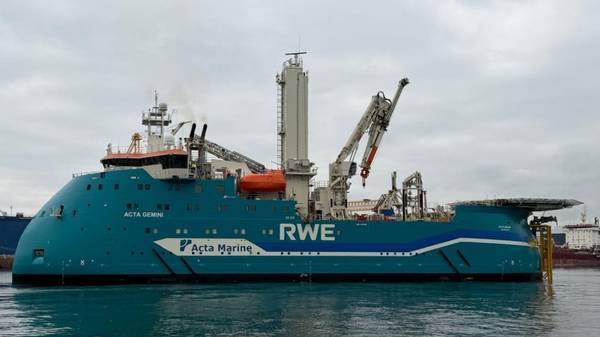
Acta Gemini vessel. Acta Marine takes delivery of methanol dual-fuel CSOV Acta Gemini for RWE wind farm charter  

The vessel will support operations at the Sofia Offshore Wind Farm at Dogger Bank.

Yeva Wood and Kirsten Møller Jørgensen. Malik Supply expands Danish team with bunker trader and finance hire  

Danish bunker supplier Malik Supply adds two new staff across its Fredericia and Aalborg offices.

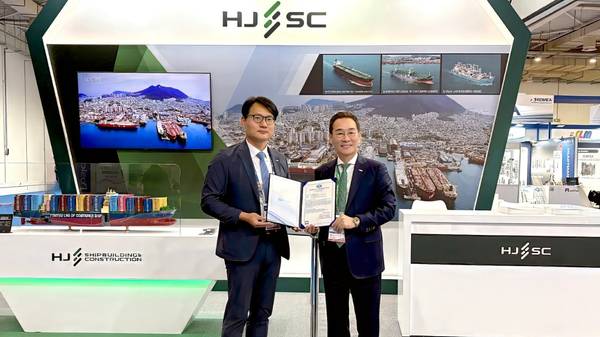
AiP award ceremony for a 10,000-teu biofuel-powered container ship. HJSC wins AiP for 10,000-teu biofuel-powered container ship design  

South Korean shipbuilder HJ Shipbuilding & Construction receives classification society approval for its biofuel vessel design at Posidonia.

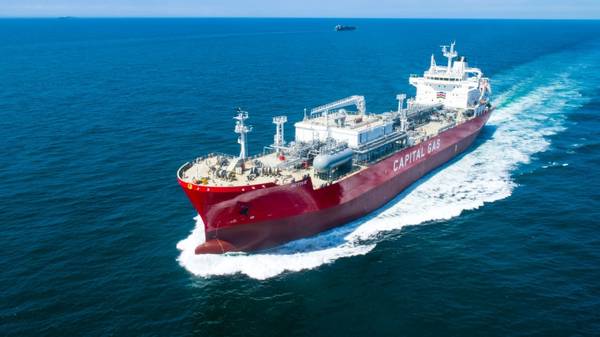
Active vessel. Capital Clean Energy Carriers takes delivery of LNG carrier and dual-fuel gas carrier, secures five new charters  

Athens-based CCEC expands its fleet and pushes contracted revenue backlog to $3.1bn.

VPS logo. Fuel quality management for vessels in extended idle: Arabian Gulf, Gulf of Oman and adjacent anchorages | Rahul Choudhuri, VPS  

Managing fuel quality deterioration following the closure of the Strait of Hormuz.

Person signing a document. Agastya Green Fuels signs 250,000 t/yr e-methanol offtake deal with Sri Lanka’s SAR Group  

Indian producer and Sri Lankan maritime firm agree long-term green methanol supply partnership.


↑  Back to Top