This is a legacy page. Please click here to view the latest version.
Thu 8 May 2008, 11:14 GMT

Petroplus reports 72% rise in net income


Leading middle distillate refiner's first quarter results exceed market expectations.


Swiss-based oil refiner Petroplus Holdings AG has reported a 72 percent rise in net income for the first quarter of 2008 compared to the prior year quarter.

Net income from continuing operations in the first quarter of 2008 was $86.8 million, or $1.26 per share, compared to $52.7 million, or $0.86 per share, in the quarter ended March 31 2007 and $50.3 million, or US$0.82 per diluted share, in the quarter ended December 2007. The financial results are better than those forecasted by leading market experts. A recent survey of six analysts carried out by Reuters had expected the Petroplus to post a net profit of$75 million.

For the quarter ended March 31, 2008, refining and marketing EBITDA (refining and marketing "earnings before interest, taxes, depreciation and amortization") was approximately $207 million. The first quarter 2008 refining and marketing EBITDA reflects a full quarter of operations for the company's five refineries. Coryton operations were impacted by unplanned maintenance related to the restart of the refinery following the incident in October 2007, and Cressier operations were impacted by a twelve day maintenance period originally expected to be completed in the fourth quarter of 2008. For the quarter ended March 31, 2007, refining and marketing EBITDA was approximately $55 million and included the operations for three refineries, Cressier, Teesside and BRC.

Commenting on the quarter, Robert J. Lavinia, Petroplus's Chief Executive Officer, said, "This was a very difficult market for refining companies. Refined clean product margins were compressed during most of the first quarter, as the cost of crude oil increased more rapidly than refined product prices. During the first quarter, we had the immediate impact of the higher cost of fuel consumed in production without a correlating uplift in clean product cracks. Further, there was the overall weakness in the gasoline crack and a weakening US dollar. It was not until March, that we started to see the strength in middle distillates, and in April diesel cracks rose to all time-highs."

With regards to operations, Mr. Lavina commented, "After completing its start-up early in the quarter, the Coryton refinery had some remaining maintenance that curtailed crude run rates for most of the quarter. After completion of the maintenance work, the total throughput increased to over 200,000 barrels per day. On March 31 we added the Petit Couronne and Reichstett refineries to our group of refining assets. The integration of the two French refineries went exceptionally well and we look forward to their contribution to our bottom line."

Commenting on the balance sheet at quarter end, Karyn F. Ovelmen, Petroplus's Chief Financial Officer, said, "We ended the quarter in a solid financial position, even after taking into consideration the challenging refining market during the first quarter and the funding requirements for the two new French refinery acquisitions. Our net debt-to-net capitalization ratio at March 31 is approximately 39 percent. We had approximately $96 million in cash, $1.8 billion of debt outstanding and $2.6 billion of shareholders' equity at quarter end."

Commenting on the capital structure going forward, Ms. Ovelmen said, "Our production focus, of almost 50% on the middle of the barrel, coupled with our disciplined capital program should enhance our free cashflows and capital structure going forward. As the largest producer in the independent refining sector of middle distillates in Western Europe, our future cashflows should benefit from the supply-demand tightness in the distillate market. Further enhancing our future free cashflows is our disciplined capital program. We have no high dollar, long lead-time, capital return projects. During the first quarter we spent approximately $60 million for capital maintenance and we continue to expect to meet our 2008 total capital budget amount of approximately $340 million."

Throughput rates by refinery for the second quarter and full year 2008, including intermediate feedstocks, should average approximately as follows:

Coryton at 200,000 to 210,000 bpd for the second quarter and 195,000 to 205,000 for the year; Ingolstadt at 95,000 to 105,000 bpd for the second quarter and 90,000 to 100,000 for the year;

BRC at 65,000 to 75,000 bpd for the second quarter and 90,000 to 95,000 bpd for the year;

Cressier at 55,000 to 60,000 bpd for the second quarter and 55,000 to 60,000 bpd for the year; Teesside at 90,000 to 95,000 bpd for the second quarter and 85,000 to 90,000 bpd for the year;

Petit Couronne at 120,000 to 130,000 bpd for the second quarter and 120,000 to 130,000 for the year; and Reichstett at 70,000 to 80,000 bpd for the second quarter and 70,000 to 75,000 for the year.

The throughputs for the BRC and Teesside refineries reflect the scheduled maintenance in the second quarter which is estimated to last about 30 days and 25 days, respectively.


TMS Tankers logo. Lloyd’s Register delivers fleet-wide energy transition roadmap for TMS Tankers  

LR Advisory maps vessel-level compliance risk and decarbonisation pathways across the Greek owner’s tanker fleet.

Dr Prapisala Thepsithar, GCMD. GCMD shares biofuel assurance and green finance insights at Hong Kong shipping decarbonisation forum  

The Global Centre for Maritime Decarbonisation presented pilot findings on biofuels and energy efficiency financing.

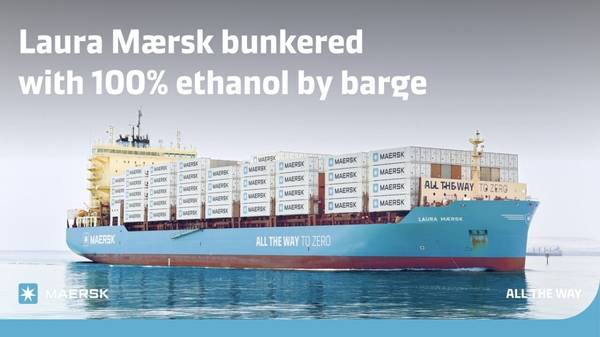
Laura Maersk ethanol bunkering graphic. Maersk conducts large-scale ethanol bunkering trial on Laura Maersk in Rotterdam  

A.P. Moller – Maersk has conducted a barge-delivered ethanol bunkering operation as part of ongoing fuel trials.

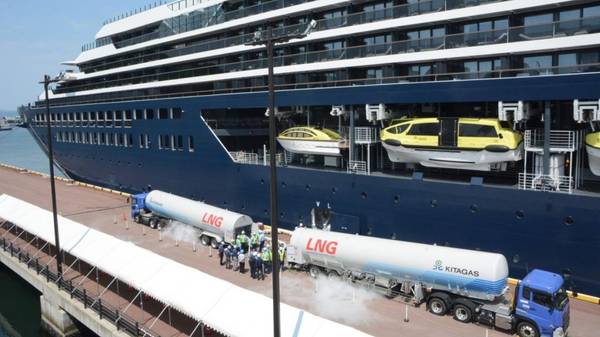
Luminara vessel truck-to-ship bunkering. MOL Techno-Trade completes first LNG bunkering for international cruise ship in Hokkaido  

Truck-to-ship LNG operation at Hakodate marks first such supply to an international cruise vessel in Hokkaido.

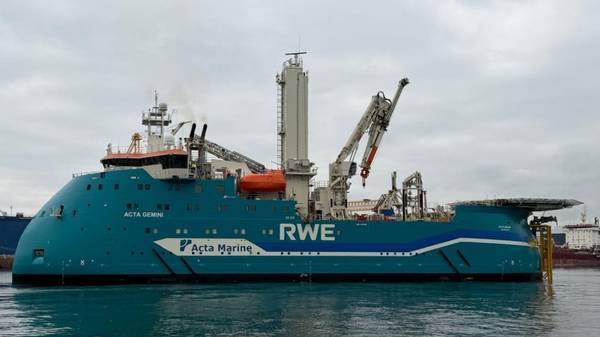
Acta Gemini vessel. Acta Marine takes delivery of methanol dual-fuel CSOV Acta Gemini for RWE wind farm charter  

The vessel will support operations at the Sofia Offshore Wind Farm at Dogger Bank.

Yeva Wood and Kirsten Møller Jørgensen. Malik Supply expands Danish team with bunker trader and finance hire  

Danish bunker supplier Malik Supply adds two new staff across its Fredericia and Aalborg offices.

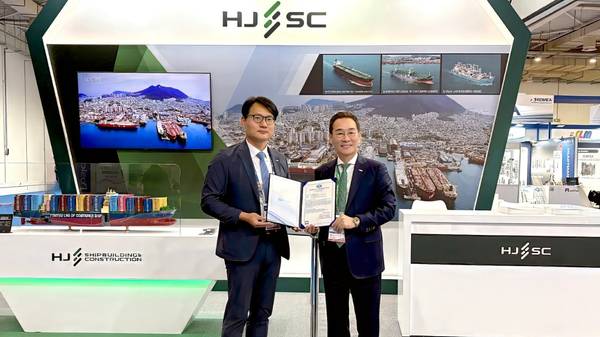
AiP award ceremony for a 10,000-teu biofuel-powered container ship. HJSC wins AiP for 10,000-teu biofuel-powered container ship design  

South Korean shipbuilder HJ Shipbuilding & Construction receives classification society approval for its biofuel vessel design at Posidonia.

Active vessel. Capital Clean Energy Carriers takes delivery of LNG carrier and dual-fuel gas carrier, secures five new charters  

Athens-based CCEC expands its fleet and pushes contracted revenue backlog to $3.1bn.

VPS logo. Fuel quality management for vessels in extended idle: Arabian Gulf, Gulf of Oman and adjacent anchorages | Rahul Choudhuri, VPS  

Managing fuel quality deterioration following the closure of the Strait of Hormuz.

Person signing a document. Agastya Green Fuels signs 250,000 t/yr e-methanol offtake deal with Sri Lanka’s SAR Group  

Indian producer and Sri Lankan maritime firm agree long-term green methanol supply partnership.


↑  Back to Top