This is a legacy page. Please click here to view the latest version.
Fri 25 Apr 2008, 13:23 GMT

Royal Caribbean reports higher first quarter earnings


Highest first quarter yieds in company's history achieved despite $685 million fuel costs.


Royal Caribbean Cruises Ltd. has announced net income for the first quarter 2008 of $75.6 million, or $0.35 per share, compared to net income of $8.8 million, or $0.04 per share, in 2007. The significant increase in earnings per share versus the first quarter 2007 was due primarily to increased capacity and higher yields, offset by higher fuel prices.

Revenues for the first quarter 2008 increased to $1.4 billion from revenues of $1.2 billion in the first quarter 2007, whilst higher fuel prices increased costs by $60 million in the first quarter 2008, which reduced earnings per share by $0.28.

Key figures for the first quarter 2008, as compared to the first quarter 2007, were as follows:

* Net Yields increased 7.1% to a record $173 per APCD.
* Excluding fuel, Net Cruise Costs per APCD decreased 1.0%.
* Fuel prices increased 53%, while fuel costs per APCD increased 24%; benefiting from energy saving initiatives and hedging. The average at- the-pump price for the quarter was $592 per metric ton versus $388 per metric ton in 2007.
* Net Cruise Costs per APCD increased 2.9%.

"It is gratifying that, despite the challenging economic times, our guests continue to appreciate the outstanding value offered by our brands," said Richard Fain, Chairman and Chief Executive Officer. "We delivered the highest first quarter yields in our company's history, with significant improvement in ticket prices and continued healthy onboard spending."

The company expects its second quarter 2008 earnings per share to be $0.40 to $0.45, and expects full year 2008 earnings per share to be $2.85 to $3.00.

"Our record yield performance in the first quarter and our solid forward bookings demonstrate our resilience and are certainly reassuring," said Fain. "Our brands have clearly differentiated themselves and our portfolio of innovative newbuilds will continue to feed their momentum."

Fain continued, "Higher fuel prices have been a prolonged challenge for us, but our management team remains focused on cost controls and continues to help mitigate the impact. Except for higher fuel prices, it is very gratifying to see our revenues and earnings projected to be as good or better than our original expectations. Our brands' momentum, cost savings initiatives, growing economies of scale and the efficiencies of our new vessels should continue to improve our shareholder value."

The company expects to have a 5.1% increase in capacity in 2008, driven primarily by a full year of Liberty of the Seas, the Independence of the Seas entering service in May, Pullmantur's purchase of Pacific Star, and Celebrity Solstice entering service in the fourth quarter.

Royal Caribbean does not forecast fuel prices and its cost guidance for fuel is based on current at-the-pump prices net of any hedge impacts. Based on today's fuel prices, the company has included $685 million in fuel expenses in its full year 2008 guidance. This figure is $90 million, or $0.42 per share, higher than at the time of its previous earnings guidance.

As of March 31, 2008, liquidity was $1.4 billion, including $0.4 billion in cash and cash equivalents and $1.0 billion in available credit on the company's unsecured revolving credit facility.

Based on current ship orders, projected capital expenditures for 2008, 2009, 2010, 2011, and 2012, are estimated to be $1.9 billion, $2.0 billion, $2.2 billion, $1.0 billion, and $1.0 billion, respectively. Projected capacity increases for the same five years are estimated at 5.1%, 9.3%, 11.4%, 6.4%, and 3.4%, respectively.


TMS Tankers logo. Lloyd’s Register delivers fleet-wide energy transition roadmap for TMS Tankers  

LR Advisory maps vessel-level compliance risk and decarbonisation pathways across the Greek owner’s tanker fleet.

Dr Prapisala Thepsithar, GCMD. GCMD shares biofuel assurance and green finance insights at Hong Kong shipping decarbonisation forum  

The Global Centre for Maritime Decarbonisation presented pilot findings on biofuels and energy efficiency financing.

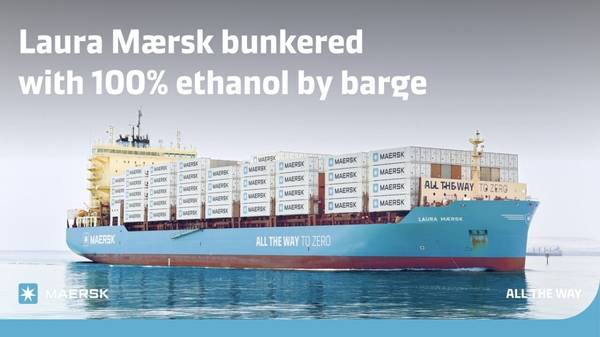
Laura Maersk ethanol bunkering graphic. Maersk conducts large-scale ethanol bunkering trial on Laura Maersk in Rotterdam  

A.P. Moller – Maersk has conducted a barge-delivered ethanol bunkering operation as part of ongoing fuel trials.

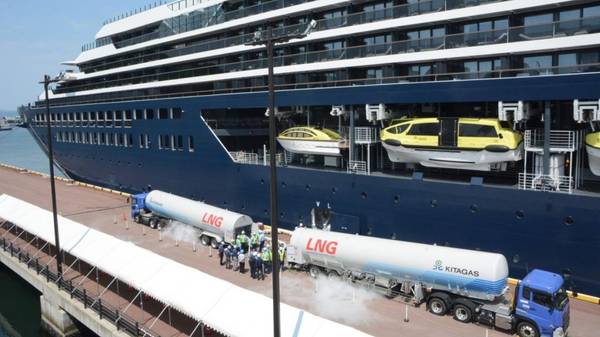
Luminara vessel truck-to-ship bunkering. MOL Techno-Trade completes first LNG bunkering for international cruise ship in Hokkaido  

Truck-to-ship LNG operation at Hakodate marks first such supply to an international cruise vessel in Hokkaido.

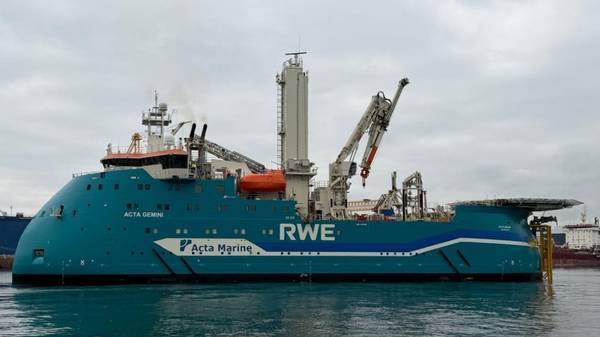
Acta Gemini vessel. Acta Marine takes delivery of methanol dual-fuel CSOV Acta Gemini for RWE wind farm charter  

The vessel will support operations at the Sofia Offshore Wind Farm at Dogger Bank.

Yeva Wood and Kirsten Møller Jørgensen. Malik Supply expands Danish team with bunker trader and finance hire  

Danish bunker supplier Malik Supply adds two new staff across its Fredericia and Aalborg offices.

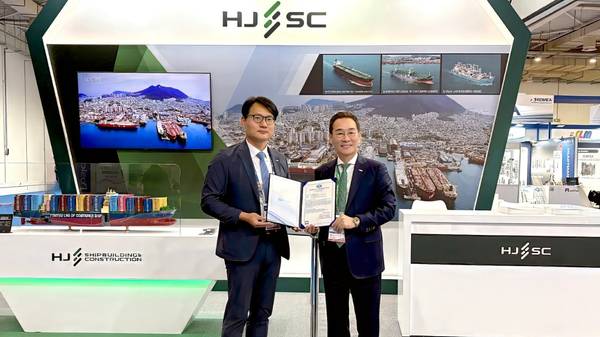
AiP award ceremony for a 10,000-teu biofuel-powered container ship. HJSC wins AiP for 10,000-teu biofuel-powered container ship design  

South Korean shipbuilder HJ Shipbuilding & Construction receives classification society approval for its biofuel vessel design at Posidonia.

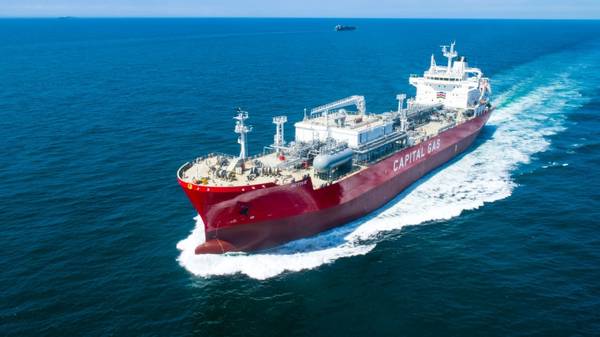
Active vessel. Capital Clean Energy Carriers takes delivery of LNG carrier and dual-fuel gas carrier, secures five new charters  

Athens-based CCEC expands its fleet and pushes contracted revenue backlog to $3.1bn.

VPS logo. Fuel quality management for vessels in extended idle: Arabian Gulf, Gulf of Oman and adjacent anchorages | Rahul Choudhuri, VPS  

Managing fuel quality deterioration following the closure of the Strait of Hormuz.

Person signing a document. Agastya Green Fuels signs 250,000 t/yr e-methanol offtake deal with Sri Lanka’s SAR Group  

Indian producer and Sri Lankan maritime firm agree long-term green methanol supply partnership.


↑  Back to Top