This is a legacy page. Please click here to view the latest version.
Fri 4 Apr 2008, 11:50 GMT

Fuel Oil workshop announced for Oil Traders' Conference


Course provider anounces fuel oil workshop at 9th Annual China Oil Traders' Conference


The Oxford Princeton Programme, the world's leading provider of education and training solutions to the energy, commodity and derivatives markets, in partnership with C1 Energy, organizing sponsor of the 9th Annual China Oil Traders' Conference, has announced two master class workshops to complement event sessions on April 23rd 2008 at the Ping Le Room, Shangri-La Hotel in Chengdu, China.

These two half-day events, which will cover fuel oil in the morning and renewabe energy in the afternoon, will offer comprehensive overviews designed with conference delegates in mind.

The Fuel oil class on the morning of April 23rd will cover the two predominant uses for fuel oil: power generation and bunker fuel. It will look at how the origin and production of fuel oil determines its properties and how these relate to end-user requirements.

The workshop will also examine how changes in the refining industry are impacting fuel availability for end users. It will discuss specifications and quality testing and how to interpret and use ISO 8217 marine fuel standards correctly, as well as new and upcoming test methodology.

The fuel oil class will explain the significance of tests and properties and consider the real reasons for quality-performance problems followed by current cases and issues, such as the impact of MARPOL Annex VI.

Below is a list of the six fuel oil workshop sessions, which will each last for 30-35 minutes:

* Crude and refinery configuration and its relationship with user requirements; impact of changing refining scenarios

* Fuel specifications and the ISO 8217 standard.

* Significance of fuel properties and tests; testing limitations.

* Handling and logistics issues.

* Inherent problem areas in quality and performance - what happens in practice.

* Current issues in bunkering - impact of MARPOL and other regulations.

For further details regarding the fuel oil workshop, please visit the Oxford Princeton website at www.oxfordprinceton.com.

China 

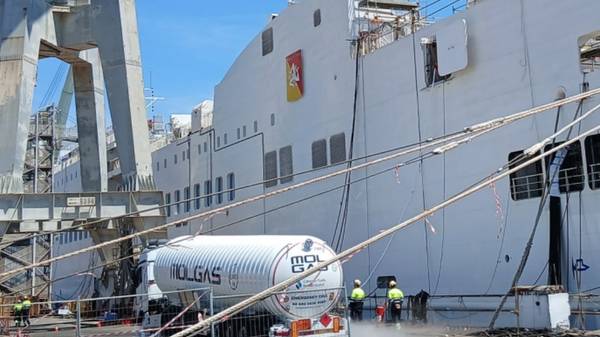
Truck-to-ship (TTS) LNG bunkering at Port of Palermo. Molgas completes first LNG bunkering operation at Palermo  

Spanish energy firm carries out maiden LNG delivery at Sicilian port.

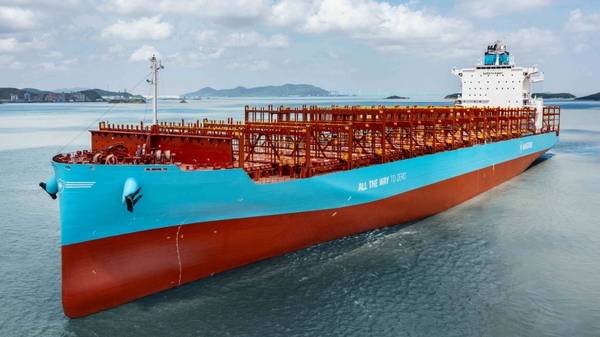
Maersk 5,900-teu vessel. Tsuneishi China delivers third methanol dual-fuel boxship in series  

Zhoushan shipbuilder hands over another 5,900-teu Maersk container vessel.

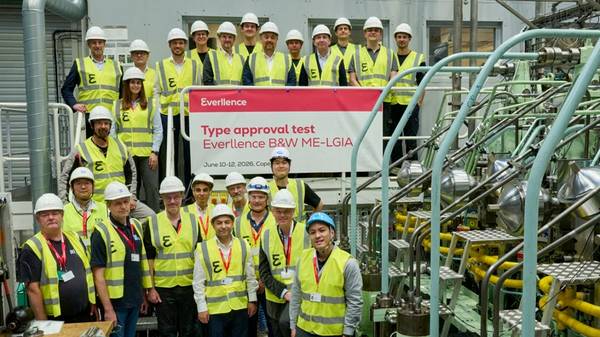
Type approval test (TAT) for ME-LGIA ammonia engine. Everllence completes type approval test for ammonia engine ahead of sea trials  

Eight classification societies oversee testing of ME-LGIA ammonia engine at Copenhagen research centre.

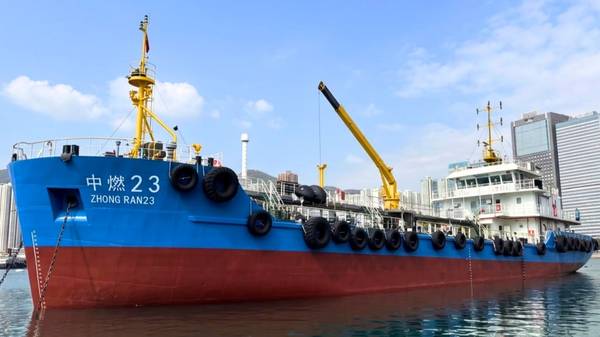
Zhong Ran 23 vessel. CPN bunker barge becomes first vessel listed under Hong Kong’s new quality bunkering scheme  

Zhong Ran 23 achieves listing under the Marine Department’s voluntary mass flow metering initiative.

Peder Moller, Bunker Holding. Bunker Holding posts $73m pre-tax profit amid geopolitical headwinds and board overhaul  

Marine fuels exceeds its own expectations despite 4% revenue decline.

Oilmar Board of Directors graphic. Oilmar formalises governance structure with establishment of board of directors  

Dubai-based marine fuels trader Oilmar appoints three-member board.

Henrik Andersen, Vestas Wind Systems A/S. Vestas Wind Systems CEO appointed vice chair of Bunker Holding  

Henrik Andersen joins the board of the marine fuels group with more than two decades of international business experience.

Tina Revsbech, Maersk Tankers. Maersk Tankers CEO Tina Revsbech joins Bunker Holding board  

Danish USTC Group appoints shipping veteran to subsidiary’s board of directors.

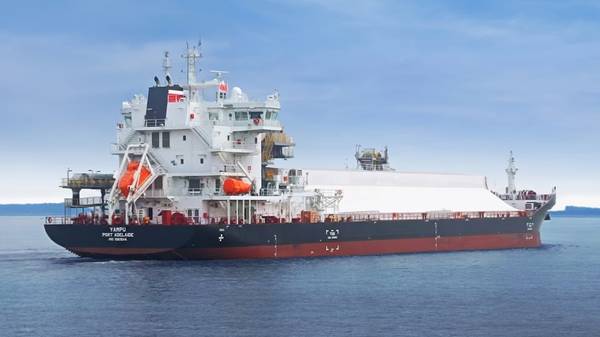
Yampu vessel. CSL delivers world’s first battery-powered self-unloading bulk carrier  

MV Yampu will transport limestone for Adbri in Australia, with full electric operation targeted by 2031.

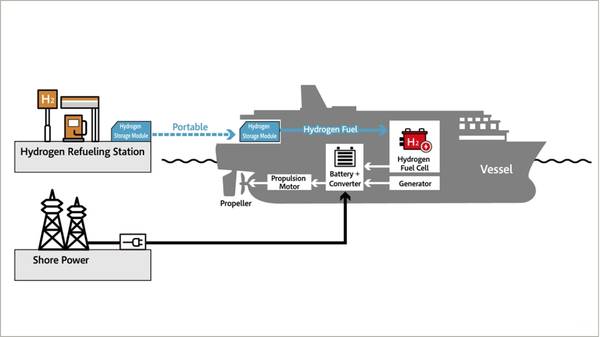
Illustration of hydrogen fuel cell system. NYK, Yanmar and Eneos to install hydrogen fuel cell system on new Tokyo dining cruise vessel  

Three Japanese companies are collaborating to bring hydrogen propulsion to a dining cruise ship due to enter service in 2027.


↑  Back to Top