This is a legacy page. Please click here to view the latest version.
Tue 25 Mar 2008, 10:27 GMT

Low Sulphur incentive plan announced for L.A. and Long Beach


Voluntary fuel replacement initiative designed to reduce ship emissions in both ports.


The Pacific Merchant Shipping Association (PMSA) has announced its partnership with the Port of Long Beach and Port of Los Angles on a program that provides financial incentives to vessel operators to voluntarily use cleaner-burning, low-sulfur fuel within the ports. Under the voluntary incentive program proposed by PMSA, the ports will offset the cost difference between currently used bunker fuel and costly low-sulfur distillate fuel for vessels that switch fuel within at least 20 miles- and as far as 40 miles—from the ports.

“This voluntary incentive-based program is the direct result of a coordinated partnership with the ports to reduce ship emissions,” said John McLaurin, President of the PMSA. “The fuel replacement initiative builds upon other successful voluntary emissions reduction programs around the ports including the vessel speed reduction program which has demonstrated a 90% compliance rate.”

Vessels participating in the incentive program must also burn low-sulfur fuel in their electricity-generating auxiliary engines while at berth—as they do now. Further, ships will also need to participate in the ports’ voluntary Vessel Speed Reduction Program which limits speeds to 12 knots during the low-sulfur fuel switch.

“PMSA and its members have been actively involved in virtually every successful voluntary port improvement program and are leaders in the reduction of emissions throughout the goods movement industries,” continued McLaurin. “Responsible green growth — simultaneous environmental improvements and expansion of port infrastructure — is possible and supported by PMSA. Reducing port congestion, expanding port capacity and improving air quality are leading initiatives within a global green growth plan.”

PMSA member companies are already working to reduce emissions by exploring the use of a wide variety of cleaner fuels, engines, and retrofit technologies that exceed existing requirements. These strategies are constantly evolving as new fuels and technologies become available and include clean burning biofuels; employing new “clean diesel” engine and retrofit technologies; experimenting with new technologies, such as propane and natural gas fueled terminal equipment; and taking other innovative steps to improve west coast air quality.

The Ports of Long Beach and Los Angeles have announced that the two harbor commissions will meet and vote today to provide funding for the voluntary incentive program.

Press Release


TMS Tankers logo. Lloyd’s Register delivers fleet-wide energy transition roadmap for TMS Tankers  

LR Advisory maps vessel-level compliance risk and decarbonisation pathways across the Greek owner’s tanker fleet.

Dr Prapisala Thepsithar, GCMD. GCMD shares biofuel assurance and green finance insights at Hong Kong shipping decarbonisation forum  

The Global Centre for Maritime Decarbonisation presented pilot findings on biofuels and energy efficiency financing.

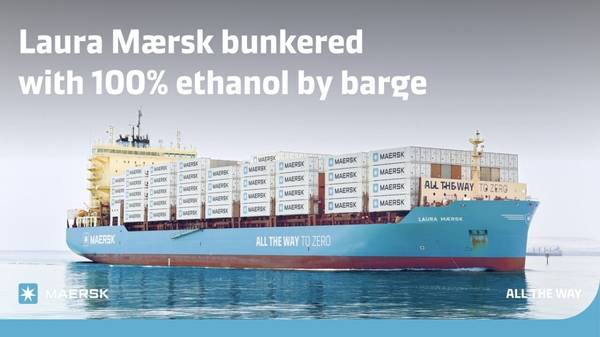
Laura Maersk ethanol bunkering graphic. Maersk conducts large-scale ethanol bunkering trial on Laura Maersk in Rotterdam  

A.P. Moller – Maersk has conducted a barge-delivered ethanol bunkering operation as part of ongoing fuel trials.

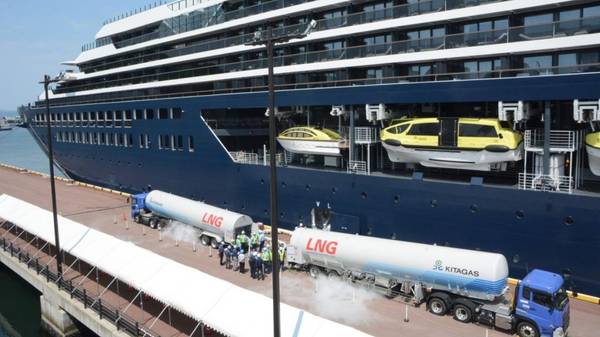
Luminara vessel truck-to-ship bunkering. MOL Techno-Trade completes first LNG bunkering for international cruise ship in Hokkaido  

Truck-to-ship LNG operation at Hakodate marks first such supply to an international cruise vessel in Hokkaido.

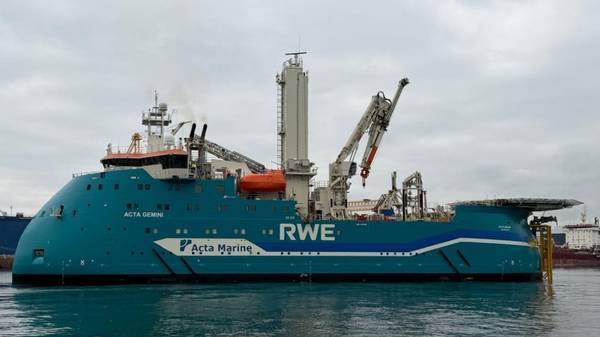
Acta Gemini vessel. Acta Marine takes delivery of methanol dual-fuel CSOV Acta Gemini for RWE wind farm charter  

The vessel will support operations at the Sofia Offshore Wind Farm at Dogger Bank.

Yeva Wood and Kirsten Møller Jørgensen. Malik Supply expands Danish team with bunker trader and finance hire  

Danish bunker supplier Malik Supply adds two new staff across its Fredericia and Aalborg offices.

AiP award ceremony for a 10,000-teu biofuel-powered container ship. HJSC wins AiP for 10,000-teu biofuel-powered container ship design  

South Korean shipbuilder HJ Shipbuilding & Construction receives classification society approval for its biofuel vessel design at Posidonia.

Active vessel. Capital Clean Energy Carriers takes delivery of LNG carrier and dual-fuel gas carrier, secures five new charters  

Athens-based CCEC expands its fleet and pushes contracted revenue backlog to $3.1bn.

VPS logo. Fuel quality management for vessels in extended idle: Arabian Gulf, Gulf of Oman and adjacent anchorages | Rahul Choudhuri, VPS  

Managing fuel quality deterioration following the closure of the Strait of Hormuz.

Person signing a document. Agastya Green Fuels signs 250,000 t/yr e-methanol offtake deal with Sri Lanka’s SAR Group  

Indian producer and Sri Lankan maritime firm agree long-term green methanol supply partnership.


↑  Back to Top