Hong Kong public policy think tank,
Civic Exchange, has submitted its views to the
Environmental Protection Department to support the mandatory requirement for at-berth fuel switching for all ocean-going vessels. The document, submitted by
Simon K W Ng, Head of Transport and Sustainability Research at Civic Exchange, has been provided below.
Mandating Fuel Switch at Berth in Hong Kong
Written Submission to the Environmental Protection Department, HKSAR Government from Civic Exchange
5 June 2013
Mandatory at-berth fuel switching is an effective means to cut ship emissions
1. Civic Exchange welcomes and supports the proposal from the Environmental Protection Department (EPD) to mandate at-berth fuel switching in Hong Kong.
2. According the latest EPD’s Hong Kong Air Pollutant Emission Inventory, marine vessels were the number one emitter of sulphur dioxide (SO2), nitrogen oxides and respirable suspended particulates (PM10) in 2011. About 40% of the pollutants are emitted while the vessels are at berth.1 A recent Civic Exchange study also estimates that SO2 emissions from ships alone are causing 385 premature deaths each year in Hong Kong, but a mandatory fuel switch at-berth scheme for all ocean-going vessels (OGVs) could reduce this number by 49%.2 At-berth emissions have to be addressed swiftly, given their proximity to the population.
3. In 2011 and 2012, the shipping industry in Hong Kong put forward the Fair Winds Charter (FWC), a voluntary at-berth fuel switching initiatives. FWC was further extended for a year in 2013. In 2011 alone, over 3,000 vessels switched fuel voluntarily, which led to a reduction of 890 tonnes of SO2. Fuel switching is a proven and practical means to make an immediate impact in reducing ship emissions. Putting regulation in place will ensure full participation, and provide a level playing field within the industry.
Some thoughts on the proposed effective date of the regulation
4. In the revised proposal on mandating fuel switch at berth prepared by EPD after stakeholder consultations, it is proposed that mandatory fuel switching will take effect from 1 January 2015. While Civic Exchange acknowledges that some vessels may not be ready to switch fuel until after their next docking, during which necessary modifications to the vessels can be made, we hold the views that most OGVs operating in Hong Kong are either already switching fuel voluntarily or are ready to comply with the regulation. From a public health perspective, the regulation should be put in place as soon as possible.
5. If the number of vessels unable to comply with the regulation is small, it is advisable that a vessel-specific grace period until the end of the next docking time could be considered. This will provide flexibility to the trade on the one hand, and the Government can act swiftly to address the broader air pollution problem on the other hand. As such, Civic Exchange suggests that mandatory at-berth fuel switching should become effective as soon as possible and no later than 1 January 2015, with the provision of a grace period to individual vessel under special circumstances deemed acceptable to EPD.
Other control measures have to be in the pipeline
6. Civic Exchange applauds the Government by taking leadership in controlling ship emissions in Hong Kong. This is a major policy breakthrough, and Hong Kong will become the first Asian city to regulate ship emissions as far as we know.
7. However, regulating at-berth fuel switching should be considered as just the first of many steps towards comprehensive control and management of emissions coming from vessels, ocean-going, river or local, as well as those generated from other port facilities.
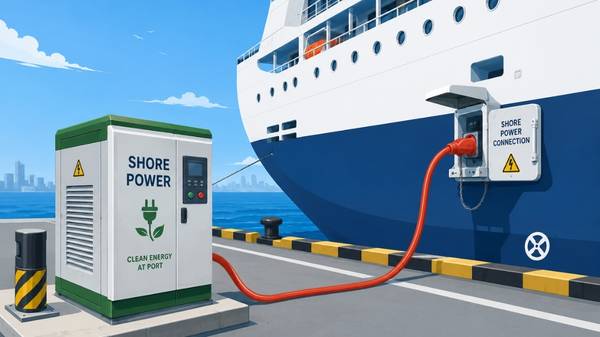
8. On-shore power, vessel speed reduction, emission reduction devices like scrubbers, cleaner fuel such as liquefied natural gas (LNG), and the establishment of an emission control area (ECA) should be further discussed and gradually pursued in a technology-neutral policy for cleaning up the maritime sector in the medium and long term. The industry should be offered the freedom and flexibility to choose the most effective measures, as long as the high standards set by the government are met.
9. Among all the options listed above, an ECA in the Pearl River Delta waters would bring enormous health benefits to the region as a whole. About 95% of SO2 and 85% of PM10 emissions from OGVs would be reduced under an ECA.3 It is a long-term goal that requires collaboration and commitment from regional governments, as well as the blessings from Beijing. In view of the density of ship activities in the region and its relentless growth, there is a pressing need for the authorities and the industry to plot the region’s future port and shipping development on a sustainable path.
Data collection and analysis
10. In recent years, scientific research findings have played a major role in supporting and shaping ship emissions control strategies for Hong Kong. Data quality and availability will determine the quality of the analyses. In this connection, Civic Exchange urges the government to collect fuel switching data from the shipmasters under the mandatory at-berth fuel switch requirement, similar to the practice under the voluntary FWC. The data collected would hugely improve the understanding of the operation aspect of fuel switching, as well as the estimation of emissions reduction benefits.
Simon K W Ng
Head of Transport and Sustainability Research
Civic Exchange