This is a legacy page. Please click here to view the latest version.
Tue 18 Jun 2013, 09:11 GMT

Joint exercise on fuel transportation


US Marines and soldiers conduct two-week bulk fuel training exercise.


US Marines and soldiers joined together at Camp Pendleton's sierra training site for a two-week bulk fuel training exercise on June 6.

The main objective of the exercise was to help Marines and soldiers become technically and tactically proficient in their skills within their military occupation specialty, while doing so in a realistic tactical training environment.

The U.S. Army Reserve conducts this exercise annually across the country, and this year Bulk Fuel Company A, 6th Engineers Support Battalion, Marine Corps Forces Reserve is serving as a bulk fuel company attachment to the Headquarters and Headquarters Detachment, 316th Quartermasters Battalion from Okmulee, Okla.

Training soldiers and Marines with real fuel, filling bladders, putting fuel into tankers, performing line-haul missions, and joint service operations are the basis of this Quartermasters Liquid Logistics Exercise.

The Marine Corps Reserve has not participated in the annual exercise until this year, making it a unique training experience for both the Marines and soldiers.

"This is the first time we have ever done a QLLEX with another service," said Army Lieutenant Colonel Scott Richards, the commanding officer of the 316th Quarter Masters Battalion. "It hasn’t been difficult at all, it’s been very fun and exciting. The soldiers really like working with the Marines."

Richards said they have learned from each other almost every step of the exercise. The only hiccup is the different nomenclature and terminology between the Army and Marine equipment.

"Everything is joint now, it’s not just working with the Army. You work with the Navy, Air Force, and Marines anywhere you go," said Richards. “This is a good opportunity for soldiers and Marines that haven’t been deployed yet to realize that these services can work together.”

The Marines are operating at a reserve fuel farm at the sierra training site and learning directly from the Army about their equipment and fuel handling.

"Our mission will be delivered by the Army, they will tell us to store fuel and when to pass fuel from our fuel farm to the Army’s fuel farm," said Captain Ryan T. Embree, the commanding officer of Bulk Fuel Company A. "We are also doing tactical convoy training and our unit on Gold Beach is doing simulated beach unloading of fuel."

Embree went on to explain that they maximize the training potential for their annual training by doing and learning as much as possible. The operation at Gold Beach is a different mission from that at sierra training site. Here, the Marines are simulating pulling fuel from a ship by sucking ocean water into a 20,000 gallon bladder right on the beach. That is the simulated fuel farm. The bulk fuel specialists and pump operators then pump it through a one kilometre pipeline to the Army’s larger fuel farm.

The soldiers receive it like its fuel but then purify the water and separate it into several different 3,000 gallon bladders. This whole beach operation is known as the Amphibious Assault Fuel Farm System.

Captain Sheridan J. Conklin, Inspector-Instructor of Bulk Fuel Company A said that participating in the Quartermasters Liquid Logistics Exercise reinforces the 6th Engineers Support Battalion motto: "We are ready".


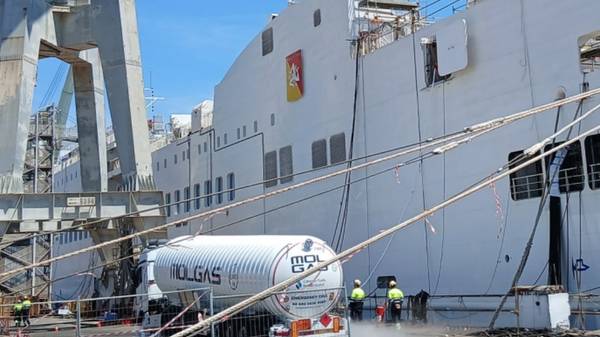
Truck-to-ship (TTS) LNG bunkering at Port of Palermo. Molgas completes first LNG bunkering operation at Palermo  

Spanish energy firm carries out maiden LNG delivery at Sicilian port.

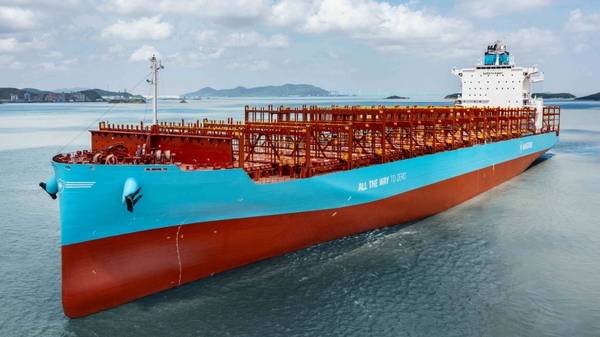
Maersk 5,900-teu vessel. Tsuneishi China delivers third methanol dual-fuel boxship in series  

Zhoushan shipbuilder hands over another 5,900-teu Maersk container vessel.

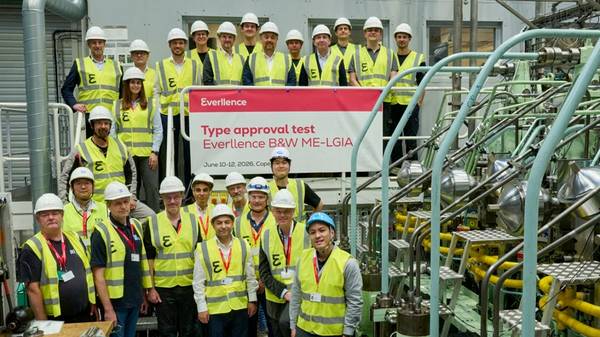
Type approval test (TAT) for ME-LGIA ammonia engine. Everllence completes type approval test for ammonia engine ahead of sea trials  

Eight classification societies oversee testing of ME-LGIA ammonia engine at Copenhagen research centre.

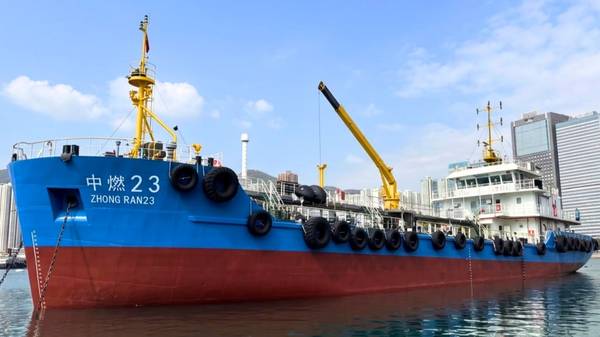
Zhong Ran 23 vessel. CPN bunker barge becomes first vessel listed under Hong Kong’s new quality bunkering scheme  

Zhong Ran 23 achieves listing under the Marine Department’s voluntary mass flow metering initiative.

Peder Moller, Bunker Holding. Bunker Holding posts $73m pre-tax profit amid geopolitical headwinds and board overhaul  

Marine fuels exceeds its own expectations despite 4% revenue decline.

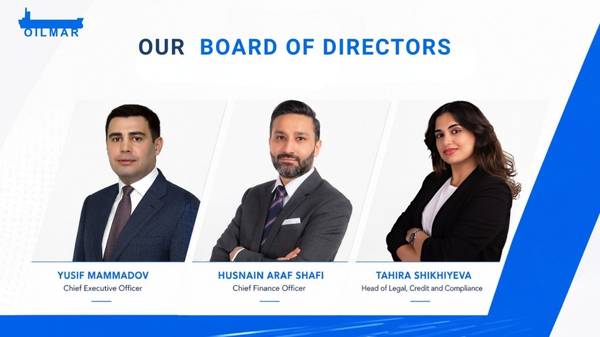
Oilmar Board of Directors graphic. Oilmar formalises governance structure with establishment of board of directors  

Dubai-based marine fuels trader Oilmar appoints three-member board.

Henrik Andersen, Vestas Wind Systems A/S. Vestas Wind Systems CEO appointed vice chair of Bunker Holding  

Henrik Andersen joins the board of the marine fuels group with more than two decades of international business experience.

Tina Revsbech, Maersk Tankers. Maersk Tankers CEO Tina Revsbech joins Bunker Holding board  

Danish USTC Group appoints shipping veteran to subsidiary’s board of directors.

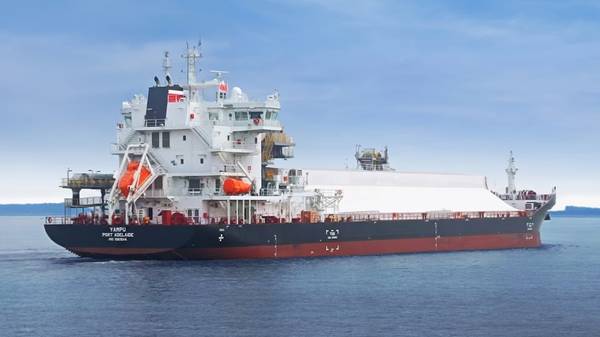
Yampu vessel. CSL delivers world’s first battery-powered self-unloading bulk carrier  

MV Yampu will transport limestone for Adbri in Australia, with full electric operation targeted by 2031.

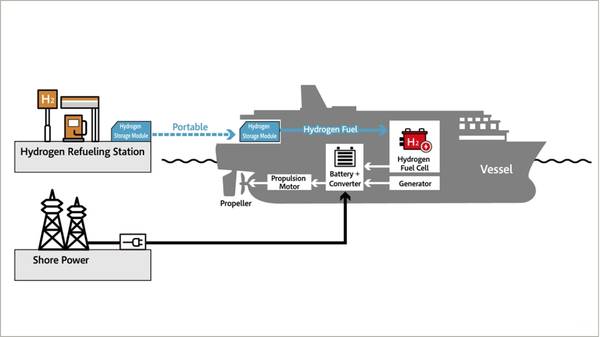
Illustration of hydrogen fuel cell system. NYK, Yanmar and Eneos to install hydrogen fuel cell system on new Tokyo dining cruise vessel  

Three Japanese companies are collaborating to bring hydrogen propulsion to a dining cruise ship due to enter service in 2027.


↑  Back to Top


 Recommended