This is a legacy page. Please click here to view the latest version.
Wed 29 May 2013, 07:41 GMT

Gazprom Neft sets 2025 bunker target


Russian oil firm reveals its retail sales objectives for 2025.


Russia's Gazprom Neft has said that it expects to have a 30 percent share of the Russian bunker, aviation and bitumen markets by 2025.

In a statement following the approval of its 2025 development strategy, Gazprom Neft said: "The company’s main retail sales objective is to maximise returns by sole use of its own distribution channels for all petroleum products. This process may involve the use of franchising and increasing Gazprom Neft’s commercial presence in key customer markets. In 2025 the target retail sales volume for Gazpromneft fuelling stations network in Russia and the CIS is 15 million tonnes of fuel. The company will tend to occupy up to 30% of the sales market of aviation fuel, bunkering and bitumen materials."

The 2025 development strategy outlines the company’s goals in key business areas such as hydrocarbon production, refining and sales.

As part of its strategy beyond 2020, Gazprom Neft said it will focus on new sources of business growth and on achieving the maximum return on investments in new projects.

Gazprom Neft said it plans to maintain production at 100 million tonnes of oil equivalent annually. The company intends to maintain the reserve level at 20 years which, given Gazprom Neft’s production plans, requires an increase in reserves of 1.2-1.7 billion tonnes of oil equivalent.

Gazprom Neft’s main production priorities are to ensure the most efficient development of its current reserves, to retain its leadership position in the northern part of the Yamalo-Nenets region (YNAD), to develop shelf projects, to increase the company’s presence internationally and to use innovative technologies to explore unconventional reserves.

The company said its priority in refining was "leadership in operational efficiency and modernization of the refining assets".

The refining yield is expected to reach 95 percent by 2020. While refining volumes are forecast to stay the same, Gazprom Neft said the use of secondary processes will allow it to boost motor fuel production by 17 percent. The company plans to almost cease production of fuel oil at this point. Gazprom Neft was one of the first companies in Russia to switch its refineries to Euro 4 and Euro 5 standards in motor fuel production.

By 2025, Gazprom Neft forecasts that its Russian refineries will be on a par technologically with major international competitors following an extensive modernisation programme.

The company said that it will continue to develop its plan for least 10% of total oil production to take place outside Russia. Gazprom Neft stressed that it would continue to focus its efforts on the Middle East, West Africa, the Balkans, Latin America and North Africa, adding that it would also concentrate on refining operations in Europe and South East Asia.

Commenting on the 2025 development strategy, Alexey Miller, Chairman of Gazprom Neft's Board of Directors, said: "Gazprom Neft continues to be one of the most efficient players in Russia’s oil industry and aims to retain this position in the future. The 2025 strategy outlines Gazprom Neft’s business’ goals and challenges and establishes a firm foundation for future growth and geographical expansion. It allows the company to become the industry leader in refining yield, to significantly grow shareholder value and to secure sustainable development through to 2025."

Russia 

TMS Tankers logo. Lloyd’s Register delivers fleet-wide energy transition roadmap for TMS Tankers  

LR Advisory maps vessel-level compliance risk and decarbonisation pathways across the Greek owner’s tanker fleet.

Dr Prapisala Thepsithar, GCMD. GCMD shares biofuel assurance and green finance insights at Hong Kong shipping decarbonisation forum  

The Global Centre for Maritime Decarbonisation presented pilot findings on biofuels and energy efficiency financing.

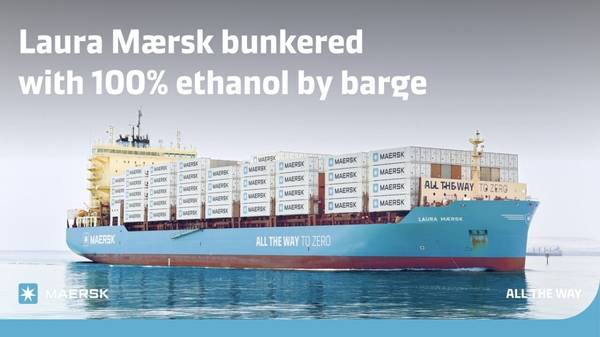
Laura Maersk ethanol bunkering graphic. Maersk conducts large-scale ethanol bunkering trial on Laura Maersk in Rotterdam  

A.P. Moller – Maersk has conducted a barge-delivered ethanol bunkering operation as part of ongoing fuel trials.

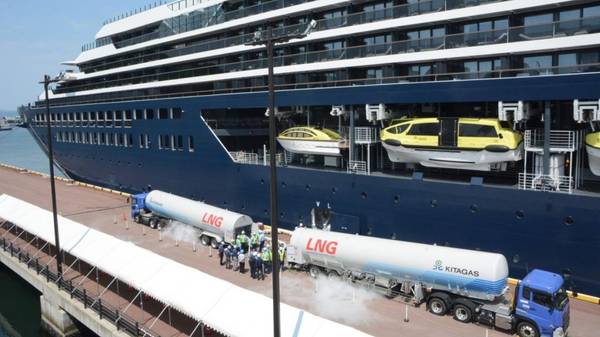
Luminara vessel truck-to-ship bunkering. MOL Techno-Trade completes first LNG bunkering for international cruise ship in Hokkaido  

Truck-to-ship LNG operation at Hakodate marks first such supply to an international cruise vessel in Hokkaido.

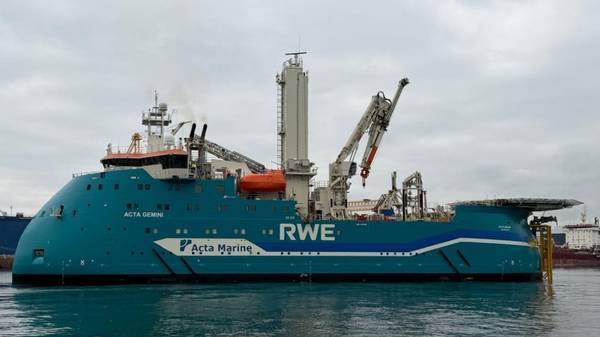
Acta Gemini vessel. Acta Marine takes delivery of methanol dual-fuel CSOV Acta Gemini for RWE wind farm charter  

The vessel will support operations at the Sofia Offshore Wind Farm at Dogger Bank.

Yeva Wood and Kirsten Møller Jørgensen. Malik Supply expands Danish team with bunker trader and finance hire  

Danish bunker supplier Malik Supply adds two new staff across its Fredericia and Aalborg offices.

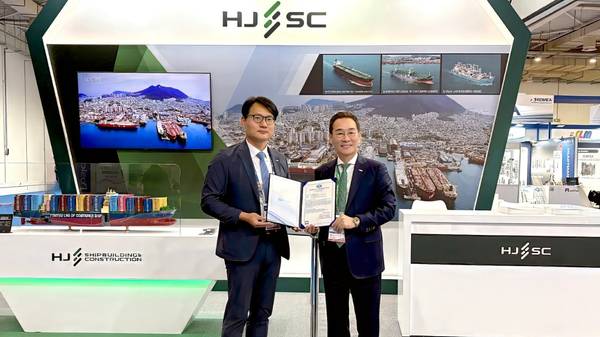
AiP award ceremony for a 10,000-teu biofuel-powered container ship. HJSC wins AiP for 10,000-teu biofuel-powered container ship design  

South Korean shipbuilder HJ Shipbuilding & Construction receives classification society approval for its biofuel vessel design at Posidonia.

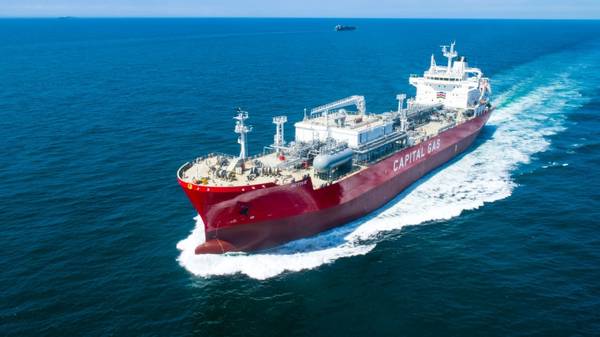
Active vessel. Capital Clean Energy Carriers takes delivery of LNG carrier and dual-fuel gas carrier, secures five new charters  

Athens-based CCEC expands its fleet and pushes contracted revenue backlog to $3.1bn.

VPS logo. Fuel quality management for vessels in extended idle: Arabian Gulf, Gulf of Oman and adjacent anchorages | Rahul Choudhuri, VPS  

Managing fuel quality deterioration following the closure of the Strait of Hormuz.

Person signing a document. Agastya Green Fuels signs 250,000 t/yr e-methanol offtake deal with Sri Lanka’s SAR Group  

Indian producer and Sri Lankan maritime firm agree long-term green methanol supply partnership.


↑  Back to Top