Tests undertaken by
Parat Halvorsen AS on oil spill response equipment (OSR) for offshore supply vessels are said to reveal significant deficiencies with systems using hot water coils.
Norway’s leading supplier of steam-based solutions undertook a series of trials after a number of lower cost hot water coil alternatives entered the market.
Kim Kristensen, Marine and Offshore, Parat Halvorsen said: "We have shown empirically that steam injection is the one viable solution proven to keep heavy oil viscous enough for easy loading and offloading."
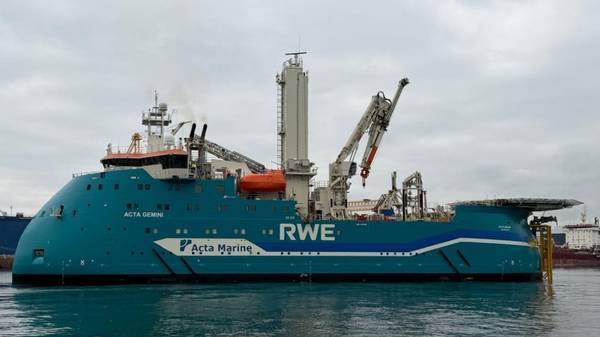
Any spilled oil is recovered by OSR-equipped vessels and stored in tanks until it can be delivered to recovery stations on land. The recovered oil has to be heated to maintain a sufficient viscosity for offloading. Parat Halvorsen offers a heating solution based on steam injection from a boiler onboard. It has supplied equipment to a number of offshore support vessels (OSVs) delivered by yards including Havyard, STX Norway, Kleven and Ulstein.
To verify whether alternative hot water-based solutions work, Parat installed a compact heating coil and a steam injection nozzle in a test tank at its facilities in Flekkesfjord. Watched by representatives from shipbuilders, owners, consultants and the Norwegian Coastal Administration, the tests measured performance of both solutions in water and in heavy oil. The empirical results are said to have shown that heat transfer in heavy oil using the hot water coil was just 10% of that achieved by the same coil in water.
"The results from the tests clearly showed that using a heating coil is not a viable option," said Mr Kristensen. "When we started the steam injection system, live temperature logging recorded the way the oil was evenly heated in a matter of minutes.
"Our advice to shipyards and owners is to exercise caution on OSR equipment selection, basing choices on correct, up-to-date information. We believe that the laws of physics are against hot water coil-based systems, particularly in cold, harsh weather conditions such as those in the North Sea.”
Companies should thoroughly evaluate equipment performance, Mr Kristensen added, "or they may find that any price differential is more trouble than it is worth."
Parat has developed the Parat ORO multi nozzle arrangement, which can heat the whole tank from one insertion point. Steam is supplied via the Parat MEL electrical boiler, approved for marine use by class societies including Germanischer Lloyd, Bureau Veritas, Det Norske Veritas and Lloyd’s Register.
It has also patented part of the hot water circulation loop used in normal operations interconnecting heat recovery and heat consumers to ensure continuous operation. If an oil spill incident should occur, the vessel operator can bypass the boiler in the hot water loop and re-mobilise the boiler to generate steam for the ORO tank heating system.