This is a legacy page. Please click here to view the latest version.
Tue 7 May 2013, 12:28 GMT

GE applies variable frequency to reduce fuel consumption


Power and propulsion system is said to reduce fuel consumption by controlling engine speed on platform support vessels.


General Electric's (GE) power conversion business has unveiled a new power and propulsion system that is said to reduce fuel consumption by controlling engine speed on platform support vessels, at Houston's Offshore Technology Conference (OTC).

The Variable Frequency Active Front-End power and propulsion system, or VF-AFE, enables ship owners using conventional power system components to lower engine speeds when feasible, cut fuel consumption and reduce emissions and maintenance requirements.

"We are increasing efficiency of existing technology for the benefit of our customers," said Paul English, marine leader of GE Power Conversion. The VF-AFE system allows the use of conventional power system components (main switchboard drives, etc.), so learning how to operate it is said to be "relatively easy" and require minimal training.

"Today, when you operate a conventional engine, its speed is always constant, whatever the load," English says. "So when the load is reduced, you are using more energy than you need because the pistons continue to run at an unnecessarily high speed. This lowers your efficiency. The VF-AFE enables you to recover that lost efficiency.”

When a support vessel is operating in dynamic positioning (DP) mode, the load on the engines is reduced just to counter the effect of wind and waves, but all engines are kept running in order to provide redundancy. This means that if the power from one engine is lost, power is still available from the others to keep the vessel in position. This arrangement, while effective, is not the most efficient. With VF-AFE, all the engines remain connected, but their speed can be cut when the load is reduced.

"We have made a calculation based on specific operating conditions, assuming a fuel price of $900 per ton," commented English. "We estimate that with the engines loaded at 50 percent of rated load for a full year on a ship with 8 megawatts of installed power operating for 300 days a year, 24 hours a day, the fuel savings could be up to $300,000 per year."

The active front end drives more than just the engine. Auxiliaries onboard the vessel still require a fixed frequency, so extra equipment will be needed to convert the variable frequency from the VF-AFE into a fixed frequency. This requires an additional investment by the customer, but even so, GE estimates that the return on the total investment is achieved in less than a year.

"This solution is unique to GE," said English. "We have looked at what can be done with existing technology that customers are using and have engineered a way to make this existing technology, that a customer is comfortable with, more efficient."

The VF-AFE uses a version of GE Power Conversion’s MV 3000 low-voltage drive that has been modified to make it more compact. "This is another example of GE learning from experience and listening to its customers," said English. "Feedback from customers was that the footprint of the MV 3000 was rather large, so we have acted on their comments. Once again, we are maximizing existing technology. The MV 3000 for the VF-AFE is existing technology, repackaged."

As with other advanced systems that GE is introducing at OTC, VF-AFE systems will be Visor-enabled; which means that GE engineers will be able to monitor them remotely. "We will use Visor, not only for maintenance purposes for the direct benefit of customers, but also to improve our understanding of the benefits they are getting from VF-AFE, so that we can possibly make further improvements to it," remarked English.

GE says it plans to build a demonstrator for the VF-AFE at one of its marine technology centers. In the future, this will enable the company to show customers the benefits of DP operation.


TMS Tankers logo. Lloyd’s Register delivers fleet-wide energy transition roadmap for TMS Tankers  

LR Advisory maps vessel-level compliance risk and decarbonisation pathways across the Greek owner’s tanker fleet.

Dr Prapisala Thepsithar, GCMD. GCMD shares biofuel assurance and green finance insights at Hong Kong shipping decarbonisation forum  

The Global Centre for Maritime Decarbonisation presented pilot findings on biofuels and energy efficiency financing.

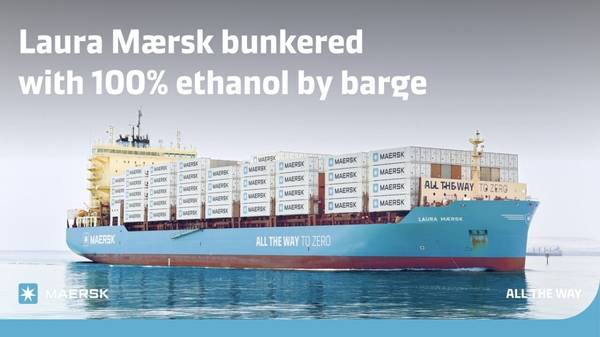
Laura Maersk ethanol bunkering graphic. Maersk conducts large-scale ethanol bunkering trial on Laura Maersk in Rotterdam  

A.P. Moller – Maersk has conducted a barge-delivered ethanol bunkering operation as part of ongoing fuel trials.

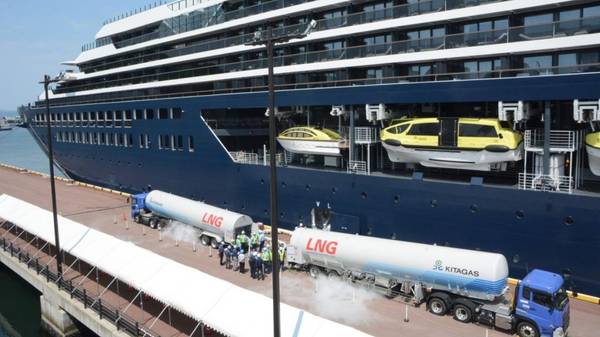
Luminara vessel truck-to-ship bunkering. MOL Techno-Trade completes first LNG bunkering for international cruise ship in Hokkaido  

Truck-to-ship LNG operation at Hakodate marks first such supply to an international cruise vessel in Hokkaido.

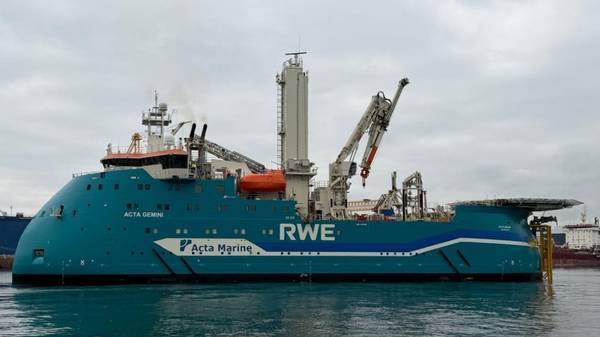
Acta Gemini vessel. Acta Marine takes delivery of methanol dual-fuel CSOV Acta Gemini for RWE wind farm charter  

The vessel will support operations at the Sofia Offshore Wind Farm at Dogger Bank.

Yeva Wood and Kirsten Møller Jørgensen. Malik Supply expands Danish team with bunker trader and finance hire  

Danish bunker supplier Malik Supply adds two new staff across its Fredericia and Aalborg offices.

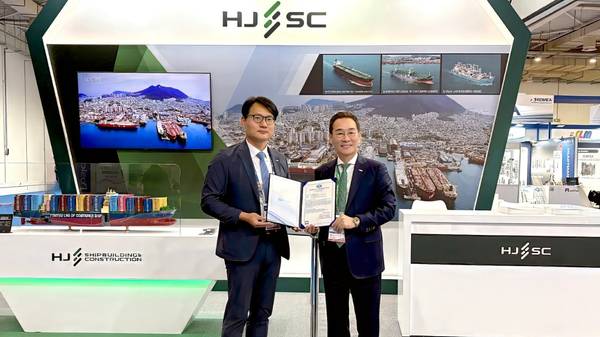
AiP award ceremony for a 10,000-teu biofuel-powered container ship. HJSC wins AiP for 10,000-teu biofuel-powered container ship design  

South Korean shipbuilder HJ Shipbuilding & Construction receives classification society approval for its biofuel vessel design at Posidonia.

Active vessel. Capital Clean Energy Carriers takes delivery of LNG carrier and dual-fuel gas carrier, secures five new charters  

Athens-based CCEC expands its fleet and pushes contracted revenue backlog to $3.1bn.

VPS logo. Fuel quality management for vessels in extended idle: Arabian Gulf, Gulf of Oman and adjacent anchorages | Rahul Choudhuri, VPS  

Managing fuel quality deterioration following the closure of the Strait of Hormuz.

Person signing a document. Agastya Green Fuels signs 250,000 t/yr e-methanol offtake deal with Sri Lanka’s SAR Group  

Indian producer and Sri Lankan maritime firm agree long-term green methanol supply partnership.


↑  Back to Top