DNV says it is offering shipowners the support they need to make newbuilds and existing vessels ‘LNG-ready’ with class-approved designs for the retrofit of LNG technology.
According to DNV, the service enables shipowners to make smart choices and minimal investments now in readiness for when LNG bunkering becomes widely available.
There are currently three primary technology options for meeting Emission Control Area (ECA) requirements: installing a scrubber, switching to low sulphur fuel oil or using LNG as fuel and installing gas engines. Alternative fuels such as methanol and biofuels are also being developed.
"Each option has different uncertainties, for example the relative immaturity of some technologies and the effect market forces will have on the price of the different fuels. These factors are making commitment to a specific solution particularly difficult at this point in time," said
Dr Gerd-Michael Würsig, Business Director for LNG fuelled ships at DNV. "The cheapest investment may end up being the most expensive option in the long run, so many shipowners are rightly cautious."
DNV believes LNG will be a good solution for many in order to meet both SOx and NOx requirements. However, the right option will depend on the shipowner's time horizon, according to Würsig. "A wrong technical decision could increase the cumulative cost of operation by millions of US dollars over the ship’s lifetime."
"Several elements must be in place before realizing the benefits of an LNG-fuelled vessel," remarked
Martin Wold, DNV’s project manager for the LNG ready service.
DNV believes that shipowners should start with seeking answers to the questions: Does LNG as fuel make sense financially for my project? Under which conditions will it make sense in the future? Are there feasible and practical ways of implementing LNG fuel in my project?
Wold added: "We recommend our clients to take a step-wise approach, and these are all questions we help them answer in the first stages of the LNG-ready service. After verifying the financial attractiveness and the technical feasibility on a high level, we move into the more detailed technical assessments if the client decides to proceed.”
"Even though LNG looks sensible after investigating the options, shipowners may still be hesitant to invest in expensive technology. The ability to have an ‘LNG-ready’ ship provides them with a sensible alternative," DNV said.
"To ensure readiness for LNG as a fuel, DNV offers verification of the design concept and confirmation of compliance through DNV’s Approval in Principle," remarkeed
Torill Grimstad Osberg, head of DNV’s LNG, Cargo handling & Piping systems section. "DNV helps to identify and mitigate the risks associated with a given design to ensure the development of a safe system right from the beginning."
DNV points out that it has already provided ‘LNG-ready’ services to a number of clients as they start preparing for 2015.
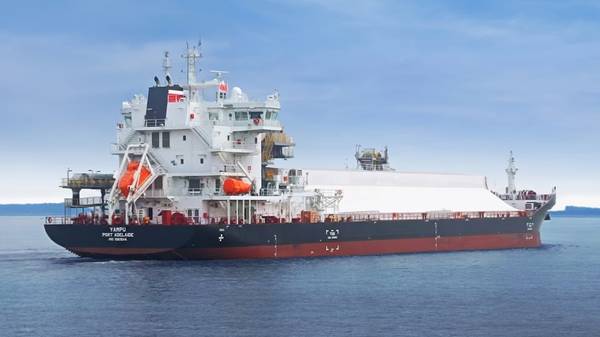
Image: Viking Energy - the world's first LNG-powered supply vessel, owned by Eidesvik Offshore ASA.