This is a legacy page. Please click here to view the latest version.
Wed 10 Apr 2013, 12:24 GMT

Castrol challenges SDA methodology


Lube firm expresses concerns over the rigour of some scavenge drain oil analysis techniques used to verify lubricant performance.


Concerns over corrosive wear risk in cross-head engines have led Castrol Marine to question the rigour of some widely used scavenge drain oil analysis (SDA) techniques.

Factors influencing scavenge drain oil characteristics include fuel sulphur level, cylinder oil BN level, system oil contamination and operating profile. Accuracy is critical in SDA interpretation, not least because it supports feed-rate assumptions that are critical to cylinder oil performance, Castrol says.

"It is not possible to analyse results accurately without comprehensive knowledge of the fuel oil, the new and used system oil, feed rates and operational data collected from the engine at the time of sampling," commented Paul Harrold, Castrol Marine Technology Manager. "Our view is that there are potential shortcomings in ship-based magnetic analyser type SDA approaches because they cannot identify corrosive wear."

Cylinder wear could be assumed to be under control due to a low response on ferro-magnetic analysers where, in fact, corrosion is taking place, Harrold said. "This demands attention as evidence grows supporting our position that corrosive wear risk is going unacknowledged when cylinder oils of insufficient BN are used in slow steaming."

MAN Diesel revised guidance to customers on mid-range BN cylinder oils at the end of 2012, recommending cylinder lube oil with 70BN or higher to customers for its newest Series 9 engines when running on higher sulphur fuel (above 1.5%- 2%). The firm says it “cannot recommend” cylinder oils "with a BN level between 50 and 60" for its latest engines.

Suppliers promoting mid-range BNs for slow steaming have argued that Series 9 engines represent only a small part of the current fleet. However, Castrol notes that mid-range cylinder oils were initially claimed as a complete solution for all conditions.

"We make no apology for renewing counselling caution on SDA methodology as the full consequences of lubricant selection when slow steaming continue to emerge,” said Mr Harrold. “Onboard SDA does not cover the full picture on cylinder oil feed rate optimisation. Normal corrosive wear patterns generate iron compounds which are predominantly non-magnetic and are thus not detected by onboard analysers."


TMS Tankers logo. Lloyd’s Register delivers fleet-wide energy transition roadmap for TMS Tankers  

LR Advisory maps vessel-level compliance risk and decarbonisation pathways across the Greek owner’s tanker fleet.

Dr Prapisala Thepsithar, GCMD. GCMD shares biofuel assurance and green finance insights at Hong Kong shipping decarbonisation forum  

The Global Centre for Maritime Decarbonisation presented pilot findings on biofuels and energy efficiency financing.

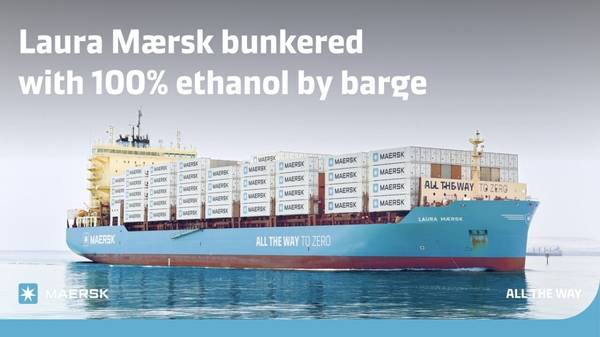
Laura Maersk ethanol bunkering graphic. Maersk conducts large-scale ethanol bunkering trial on Laura Maersk in Rotterdam  

A.P. Moller – Maersk has conducted a barge-delivered ethanol bunkering operation as part of ongoing fuel trials.

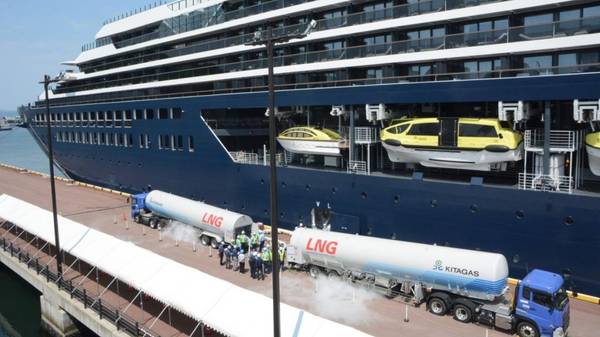
Luminara vessel truck-to-ship bunkering. MOL Techno-Trade completes first LNG bunkering for international cruise ship in Hokkaido  

Truck-to-ship LNG operation at Hakodate marks first such supply to an international cruise vessel in Hokkaido.

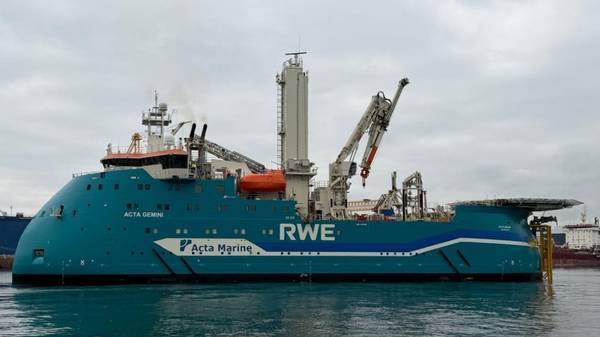
Acta Gemini vessel. Acta Marine takes delivery of methanol dual-fuel CSOV Acta Gemini for RWE wind farm charter  

The vessel will support operations at the Sofia Offshore Wind Farm at Dogger Bank.

Yeva Wood and Kirsten Møller Jørgensen. Malik Supply expands Danish team with bunker trader and finance hire  

Danish bunker supplier Malik Supply adds two new staff across its Fredericia and Aalborg offices.

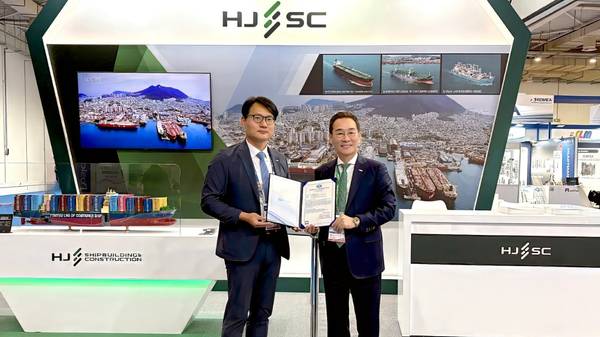
AiP award ceremony for a 10,000-teu biofuel-powered container ship. HJSC wins AiP for 10,000-teu biofuel-powered container ship design  

South Korean shipbuilder HJ Shipbuilding & Construction receives classification society approval for its biofuel vessel design at Posidonia.

Active vessel. Capital Clean Energy Carriers takes delivery of LNG carrier and dual-fuel gas carrier, secures five new charters  

Athens-based CCEC expands its fleet and pushes contracted revenue backlog to $3.1bn.

VPS logo. Fuel quality management for vessels in extended idle: Arabian Gulf, Gulf of Oman and adjacent anchorages | Rahul Choudhuri, VPS  

Managing fuel quality deterioration following the closure of the Strait of Hormuz.

Person signing a document. Agastya Green Fuels signs 250,000 t/yr e-methanol offtake deal with Sri Lanka’s SAR Group  

Indian producer and Sri Lankan maritime firm agree long-term green methanol supply partnership.


↑  Back to Top