This is a legacy page. Please click here to view the latest version.
Wed 20 Mar 2013, 18:50 GMT

Maersk: Bunker costs would have been $1.6bn higher


Container line says its financial results would have effectively swung from positive to negative had it not improved its energy efficiency.


The world's largest container shipping company and bunker buyer, Maersk Line, has revealed that its bunker fuel costs would have been approximately USD 1.6 billion higher in 2012 had it not improved its energy efficiency since 2007.

Had it not been for the firm's sustainability strategy over the past six years, Maersk Line says that its overall financial results would have effectively swung from positive from negative.

"The dollar value of the energy efficiency improvements is clear: If Maersk Line had not improved its efficiency since 2007, the fuel cost would have been approximately USD 1.6 billion higher in 2012, effectively swinging Maersk Line’s overall financial result from positive to negative," the container shipping giant said.

One result in particular stood out in Maersk Line’s recently published 2012 Sustainability Progress Update: the company reached its 2020 target of reducing CO2 emissions by 25 percent from its benchmark 2007 levels.

“Maersk Line’s energy efficiency improvements in 2012 have led to a remarkable achievement which we are very proud of - we have met our 25 percent CO2 emissions reduction target eight years early,” said Søren Skou, CEO of Maersk Liner Business.

The company has announced that it will now aim to achieve a 40 percent CO2 reduction per container kilometre by 2020 (from 2007 levels). The Triple-E vessels, which Maersk Line will start to take delivery of in mid-2013, look set to contribute greatly to reaching the new CO2 target for 2020.

Customers are also said to be increasingly valuing sustainability performance. Maersk Line has witnessed an increasing number of customers requesting sustainability data or engaging in dialogue on the issue. In 2012, customers are estimated to have saved 2.1 million tonnes of CO2 by shipping with Maersk Line compared to choosing a shipping line with an industry average performance.

“We welcome and encourage this interest and hope to see much more of it in 2013. An increased demand for shipping services with a strong sustainability profile will help drive industry-wide change, thereby enabling more sustainable global trade,” commented Skou.

Maersk Line’s Sustainability Progress Update 2012 can be viewed and downloaded at www.maersklineroute2.com, where stakeholders are also invited to comment and ask questions.


TMS Tankers logo. Lloyd’s Register delivers fleet-wide energy transition roadmap for TMS Tankers  

LR Advisory maps vessel-level compliance risk and decarbonisation pathways across the Greek owner’s tanker fleet.

Dr Prapisala Thepsithar, GCMD. GCMD shares biofuel assurance and green finance insights at Hong Kong shipping decarbonisation forum  

The Global Centre for Maritime Decarbonisation presented pilot findings on biofuels and energy efficiency financing.

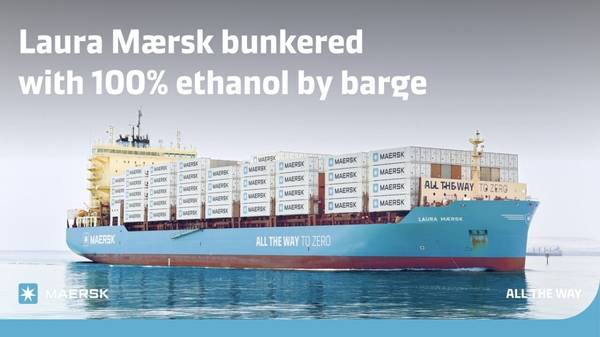
Laura Maersk ethanol bunkering graphic. Maersk conducts large-scale ethanol bunkering trial on Laura Maersk in Rotterdam  

A.P. Moller – Maersk has conducted a barge-delivered ethanol bunkering operation as part of ongoing fuel trials.

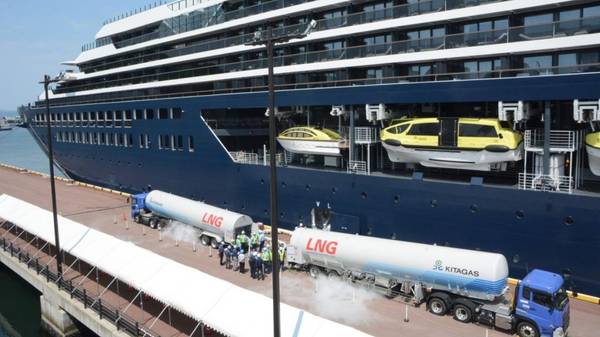
Luminara vessel truck-to-ship bunkering. MOL Techno-Trade completes first LNG bunkering for international cruise ship in Hokkaido  

Truck-to-ship LNG operation at Hakodate marks first such supply to an international cruise vessel in Hokkaido.

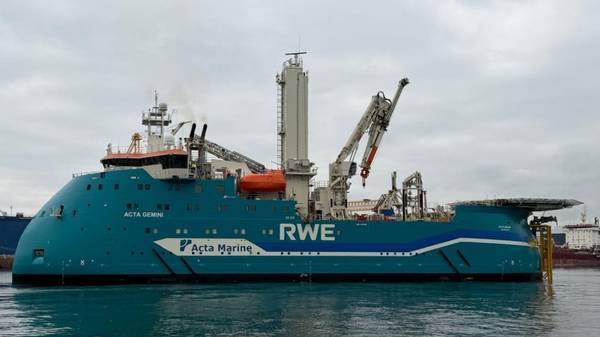
Acta Gemini vessel. Acta Marine takes delivery of methanol dual-fuel CSOV Acta Gemini for RWE wind farm charter  

The vessel will support operations at the Sofia Offshore Wind Farm at Dogger Bank.

Yeva Wood and Kirsten Møller Jørgensen. Malik Supply expands Danish team with bunker trader and finance hire  

Danish bunker supplier Malik Supply adds two new staff across its Fredericia and Aalborg offices.

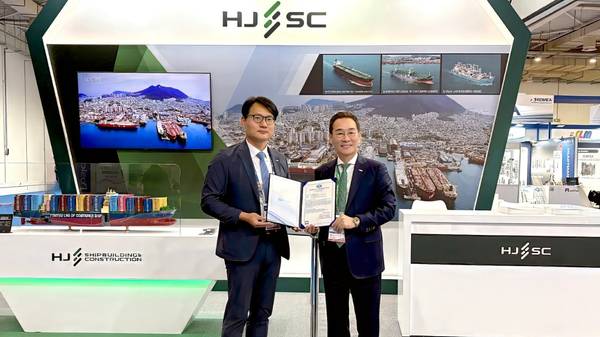
AiP award ceremony for a 10,000-teu biofuel-powered container ship. HJSC wins AiP for 10,000-teu biofuel-powered container ship design  

South Korean shipbuilder HJ Shipbuilding & Construction receives classification society approval for its biofuel vessel design at Posidonia.

Active vessel. Capital Clean Energy Carriers takes delivery of LNG carrier and dual-fuel gas carrier, secures five new charters  

Athens-based CCEC expands its fleet and pushes contracted revenue backlog to $3.1bn.

VPS logo. Fuel quality management for vessels in extended idle: Arabian Gulf, Gulf of Oman and adjacent anchorages | Rahul Choudhuri, VPS  

Managing fuel quality deterioration following the closure of the Strait of Hormuz.

Person signing a document. Agastya Green Fuels signs 250,000 t/yr e-methanol offtake deal with Sri Lanka’s SAR Group  

Indian producer and Sri Lankan maritime firm agree long-term green methanol supply partnership.


↑  Back to Top